🏛️ CulturalLong weekend · from El Paso, TX

Carlsbad Caverns, Fort Davis Buffalo Soldiers & McDonald Observatory

Three days on a loop through the Trans-Pecos cultural and natural history — Carlsbad Caverns on day one, Fort Davis National Historic Site and Fort Davis village on day two, and McDonald Observatory on day three before returning to El Paso. Fort Davis NHS preserves the most complete remaining 19th-century frontier military post in the Southwest: the Buffalo Soldiers' garrison (the 9th and 10th Cavalry regiments, the first Black peacetime regular Army units in US history, stationed at Fort Davis 1867-1885) occupied this post while guarding the Overland Trail through Apache territory. The Davis Mountains around the fort rise to 8,378 feet at Mount Livermore and form the largest sky island range in Texas; the isolated dark skies above the Davis Mountains are among the darkest in the lower 48 states, which is why McDonald Observatory — operated by the University of Texas since 1939 — sits on Mount Locke (6,791ft) and Fowlkes (6,640ft).

Day 1 — Carlsbad Caverns: Natural Entrance, Big Room, bat flight, overnight Carlsbad NMDay 2 — Fort Davis National Historic Site (Buffalo Soldiers, 9th Cavalry, Overland Trail), overnight Fort Davis TXDay 3 — McDonald Observatory (Hobby-Eberly Telescope, 9,124ft Struve; Star Party), return El Paso
Day 1Carlsbad Caverns NP

Day 1Carlsbad Caverns NP

🚗 2 hr 40 min driving📍 4 stops
🌅
Morning
🚗
Drive
El Paso, TXCarlsbad Caverns NP
2 hr 40 min8:00 AM10:40 AM
Carlsbad Caverns — Natural Entrance Route
4.9
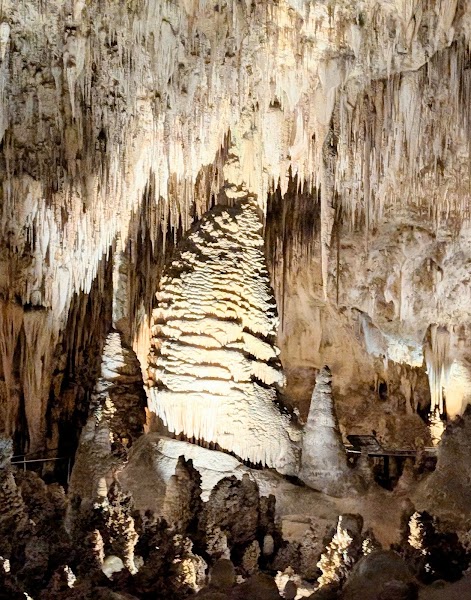
The Carlsbad Caverns Natural Entrance — a 90-foot-wide, 40-foot-tall cave mouth opening into the earth, descending 750 feet via a 1.25-mile switchback trail through the Bat Cave, Green Lake Room, and Kings Palace corridor to the Big Room. The cave was used by the Mescalero Apache for centuries before James White's 1898 descent (by guano bucket) and became a National Monument in 1923 after extensive guano mining. The NPS interpretive stops along the Natural Entrance trail cover the sulfuric acid speleogenesis process unique to this cave system.
🍽️
Lunch
Continue at Carlsbad Caverns — Big Room Self-Guided
4.9
Use the afternoon to explore a different side of Carlsbad Caverns — Natural Entrance Route — there's more to discover beyond the morning highlights.
☀️
Afternoon
Continue at Carlsbad Caverns — Evening Bat Flight
4.9
Use the afternoon to explore a different side of Carlsbad Caverns — Natural Entrance Route — there's more to discover beyond the morning highlights.
🌙
Evening
Carlsbad, NM — Hotel Night 1
Overnight in Carlsbad, NM — the Trinity Hotel (1892, the most historic downtown accommodation), Hampton Inn, or Comfort Suites near the Pecos River. The Pecos River walk through downtown Carlsbad is a pleasant evening option.
Day 2Fort Davis National Historic Site

Day 2Fort Davis National Historic Site

🚗 3 hr driving📍 4 stops
🌅
Morning
🚗
Drive
Carlsbad, NMFort Davis National Historic Site
3 hr8:00 AM11:00 AM
Fort Davis NHS — Buffalo Soldiers Garrison
4.8
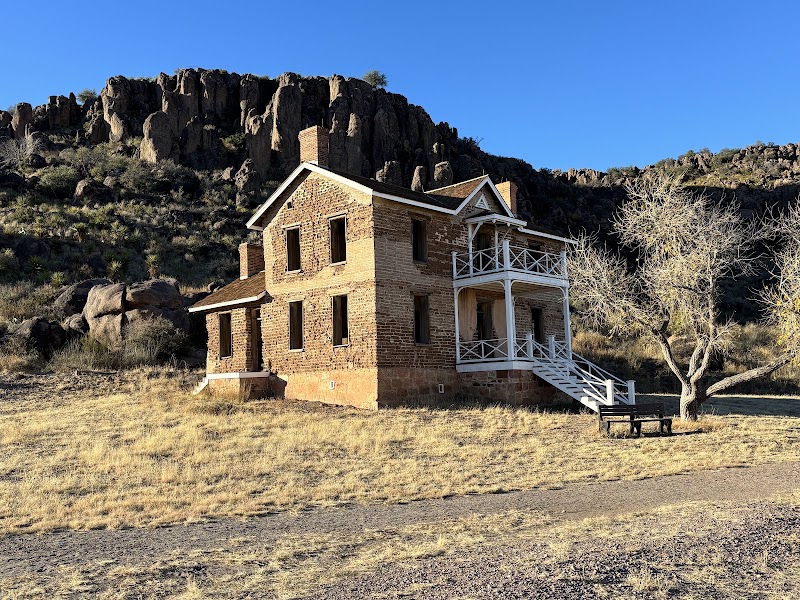
Fort Davis National Historic Site — the most intact 19th-century frontier military post in the American Southwest, established 1854 to protect the San Antonio-El Paso Road through Mescalero Apache territory. The 9th and 10th Cavalry regiments — the first Black peacetime regular Army units in United States history, nicknamed 'Buffalo Soldiers' by the Comanche and Apache they fought — were stationed at Fort Davis 1867-1885. The fort preserves 25 original stone and adobe buildings including officers' quarters, barracks, the hospital, and the parade ground; the NPS interpretation focuses on the Buffalo Soldiers' service history, the complex Apache-US Army conflict, and the Overland Trail that Fort Davis guarded.
🍽️
Lunch
Fort Davis Village — Marfa Lights Viewing Area
4.8
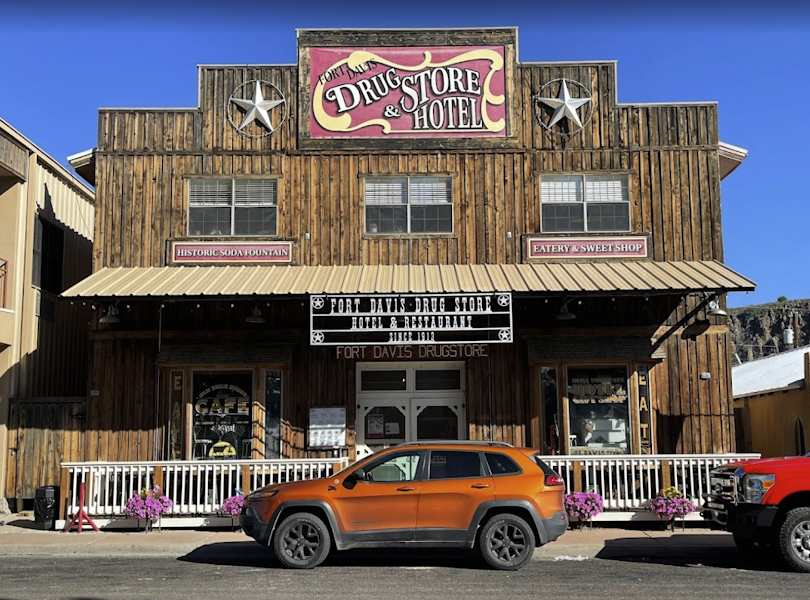
Fort Davis village and the surrounding Davis Mountains — a historic Trans-Pecos crossroads town with adobe storefronts, the Limpia Hotel (1912), and the Overland Trail Museum. The Marfa Lights Viewing Area (26 miles south on US-67 between Marfa and Alpine) is a TxDOT-built roadside pullout where the mysterious atmospheric lights reported since the 1880s are sometimes visible at night — the lights are most commonly explained as car headlights on US-67 refracted by temperature inversion layers, though some instances predate automotive travel.
☀️
Afternoon
Davis Mountains State Park — Scenic Drive
4.8
Davis Mountains State Park (2,709 acres adjacent to Fort Davis) — a scenic drive through the highest range in Texas outside the Guadalupe Mountains, with the Indian Lodge (1935 WPA-built pueblo-style lodge still operating as a state park hotel) and the Skyline Drive scenic overlook at 6,200 feet. The Davis Mountains are a sky island: the higher elevations support Emory oak, alligator juniper, ponderosa pine, and Apache pine at the summit ridges.
🌙
Evening
Fort Davis — Indian Lodge Hotel Night 2
Overnight at the Indian Lodge State Park Hotel (1935, WPA pueblo-style, Davis Mountains State Park) — the most architecturally significant lodging in the Trans-Pecos, built by the Civilian Conservation Corps in Spanish pueblo style with 39 rooms, an outdoor pool, and a restaurant. The lodge is surrounded by Davis Mountains State Park with extremely dark night skies; Milky Way visibility from the lodge patio is exceptional.
Day 3McDonald Observatory — Return to El Paso
Day 3McDonald Observatory — Return to El Paso

🚗 3 hr 35 min driving📍 2 stops
🌅
Morning
🚗
Drive
Fort Davis, TXMcDonald Observatory — Mount Locke
20 min8:00 AM8:20 AM
McDonald Observatory — Telescope Tour
4.7
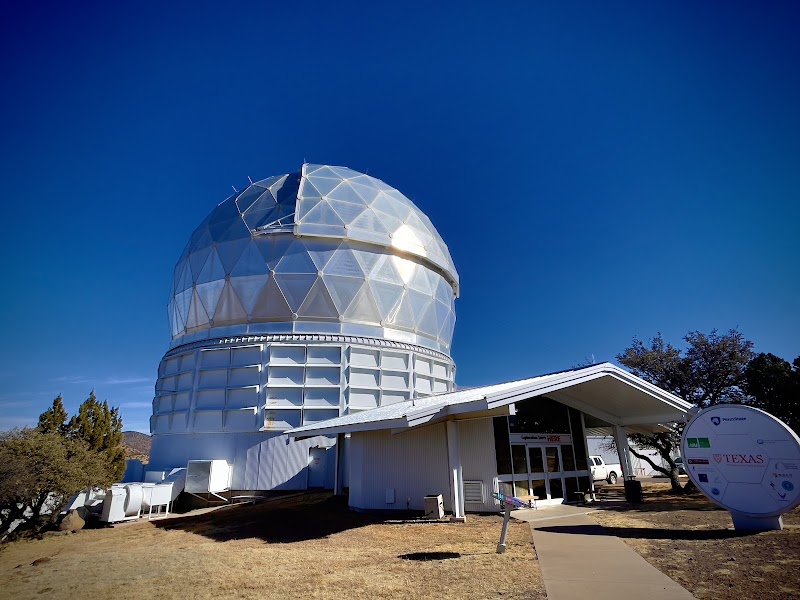
McDonald Observatory on Mount Locke (6,791 feet) — operated by the University of Texas since 1939, one of the most productive research observatories in the world and the darkest skies accessible to the public in the lower 48 states (ranked 4th globally for telescope site quality). The observatory tour covers the 107-inch Harlan J. Smith Telescope (the largest telescope in the world from 1968-1974), the 433-inch Hobby-Eberly Telescope (in the top 10 largest in the world, one of the most innovative designs — a fixed-elevation mirror that rotates on a track rather than tilting), and the original 82-inch Otto Struve Telescope (1939). The Star Parties (Wednesday/Friday/Saturday evenings) offer public viewing through smaller telescopes with ranger narration.
🍽️
Lunch
Continue at McDonald Observatory — Visitor Center & Solar Viewing
4.7
Use the afternoon to explore a different side of McDonald Observatory — Telescope Tour — there's more to discover beyond the morning highlights.
🌙
Evening
🚗
Drive
McDonald Observatory, TXEl Paso, TX
3 hr 15 min5:00 PM8:15 PM
Plan your own escapeExplore more trips →