← Weekend Escapes
🏛️ CulturalLong weekend · from New York, NY

Dia:Beacon, FDR's Hyde Park & Olana: Art, Power & Landscape in the Hudson Valley

Three days in the Hudson Valley — the 150-mile tidal river corridor north of New York City that produced America's first school of landscape painting, the most consequential presidential family of the 20th century, and the most ambitious single-building contemporary art museum in the Western Hemisphere. Dia:Beacon occupies a 1929 Nabisco box-printing factory transformed into 300,000 square feet of permanent installation by the world's most significant minimalist and post-minimalist artists. Franklin D. Roosevelt's Hyde Park estate (and Eleanor Roosevelt's Val-Kill cottage and the Vanderbilt family's 54-room Gilded Age mansion, all within 5 miles of each other) constitute the densest concentration of presidential and historical sites outside Washington DC. Olana is Frederic Church's 1872 Persian-Moorish villa above the Hudson River, designed by Church himself as the culminating work of the Hudson River School.

Day 1 — Dia:Beacon (300,000 sq ft, Judd, Serra, Turrell, De Maria permanent installations), overnight BeaconDay 2 — FDR Springwood estate + FDR Library (1941, first presidential library), Eleanor Roosevelt Val-Kill, Vanderbilt Mansion (McKim Mead & White 1898), overnight RhinebeckDay 3 — Olana (Frederic Church's 1872 Persian villa, Hudson River panorama), Hudson city, return NYC
Day 1Beacon, NY

Day 1Beacon, NY

🚗 1 hr 30 min driving📍 4 stops
🌅
Morning
🚗
Drive
New York, NYDia:Beacon — Beacon, NY
1 hr 30 min8:00 AM9:30 AM
Dia:Beacon
Dia:Beacon
4.6
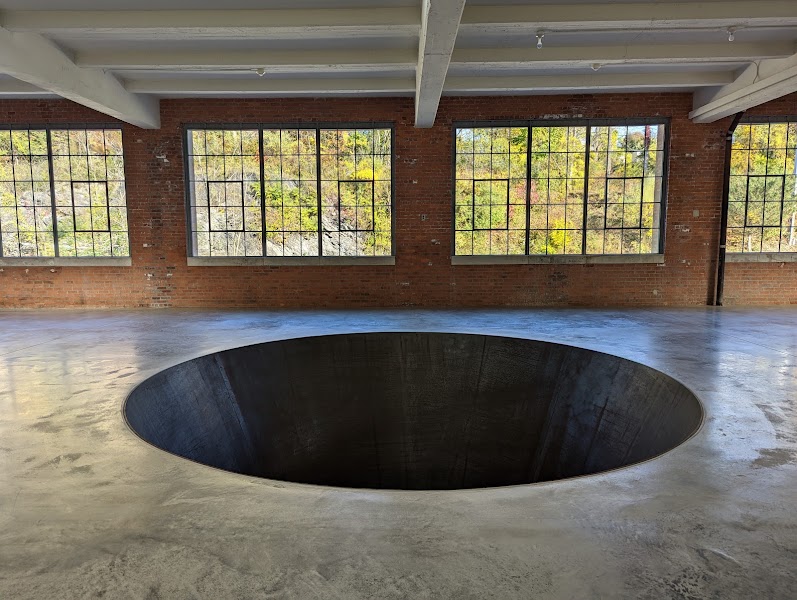
The most ambitious permanent collection museum for post-1960 art in the world — Dia Art Foundation converted a 300,000-square-foot 1929 Nabisco box-printing factory on the Hudson River into exhibition space for the permanent installation of large-scale works that could not be shown anywhere else. The building's sawtooth skylights (designed for the printing factory's color-critical work) provide exceptional north light for the art; the 31-acre campus has 8 miles of interior gallery corridors. The permanent collection includes Richard Serra's 'Torqued Ellipses' (1,700 tons of rolled Cor-Ten steel, 13-foot-tall curved plates the visitor walks between), Walter De Maria's 'The Equal Area Series' (two rooms of sculptural steel spheres and cubes of equal surface area), Robert Irwin's site-specific scrim installation, Dan Flavin's fluorescent light corridors, and Louise Bourgeois' cast-bronze spiders. Plan 3 hours minimum.
🍽️
Lunch
Continue at Dia:Beacon — James Turrell, On Kawara & Agnes Martin Galleries
4.6
Use the afternoon to explore a different side of Dia:Beacon — there's more to discover beyond the morning highlights.
☀️
Afternoon
Beacon Main Street & Hudson Riverfront
4.7
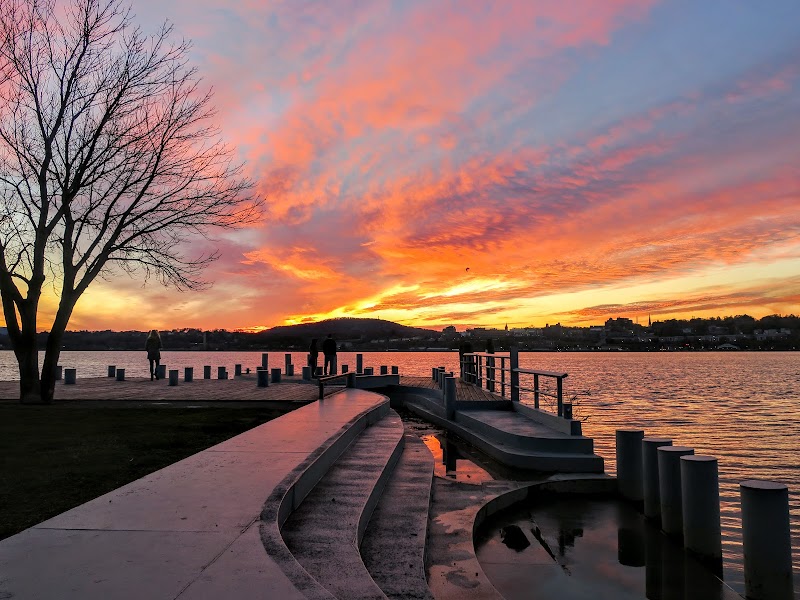
The Main Street commercial district that developed alongside Dia:Beacon's 2003 opening — Beacon transformed from a post-industrial Dutchess County city to one of the most concentrated arts communities in the Northeast in the decade after Dia opened. The 12-block Main Street corridor has 80+ galleries, studios, bookshops, ceramics workshops, and restaurants operating in 19th-century commercial buildings. The Howland Cultural Center (1872 Victorian Gothic brick building, the oldest public building in Beacon) and the Hudson River waterfront park behind Dia give views across to Storm King Mountain, the Catskills, and the Hudson Highlands.
🌙
Evening
The Roundhouse Hotel — Beacon, NY
5
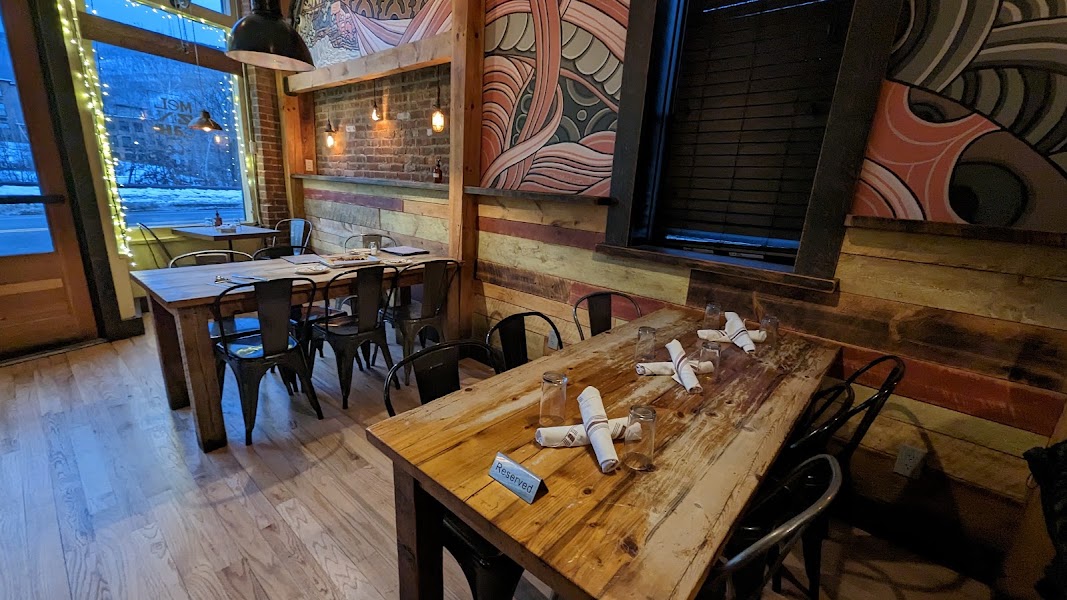
A boutique hotel in a converted 19th-century factory complex at the base of Fishkill Creek in Beacon — 38 rooms built around the original industrial machinery of the Tioronda hat factory and the cascading falls of Fishkill Creek. The Roundhouse restaurant is the best in Beacon, with Hudson Valley sourcing and the waterfalls visible through the dining room windows. Tomorrow's drive north to Hyde Park takes 45 minutes on US-9.
Day 2Hyde Park, NY — FDR, Eleanor & the Vanderbilts
Day 2Hyde Park, NY — FDR, Eleanor & the Vanderbilts
🚗 45 min driving📍 4 stops
🌅
Morning
🚗
Drive
Beacon, NYFDR Home at Springwood — Hyde Park, NY
45 min8:00 AM8:45 AM
Franklin D. Roosevelt National Historic Site — Springwood
4.8
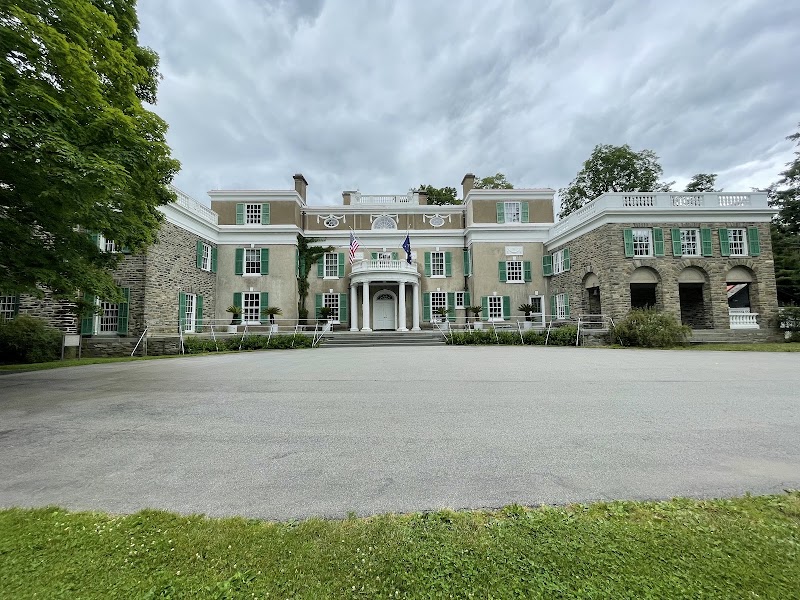
Franklin D. Roosevelt's birthplace and lifelong home — the 1867 Italianate house at Springwood was FDR's primary residence from birth to death, the place where he made his most important political decisions, and the site he returned to repeatedly during the Depression and World War II. The house tour covers Roosevelt's childhood rooms, the library where he dictated presidential decisions, and the rose garden where he and Eleanor are buried beneath a plain white marble slab (FDR's grave, placed in 1945 in the garden where he had played as a child). The adjacent FDR Presidential Library and Museum (1941, the first presidential library in the United States, established by Roosevelt himself during his third term) holds 17 million documents, including the original Pearl Harbor memo and the correspondence with Churchill and Stalin.
🍽️
Lunch
Eleanor Roosevelt National Historic Site — Val-Kill
4.7
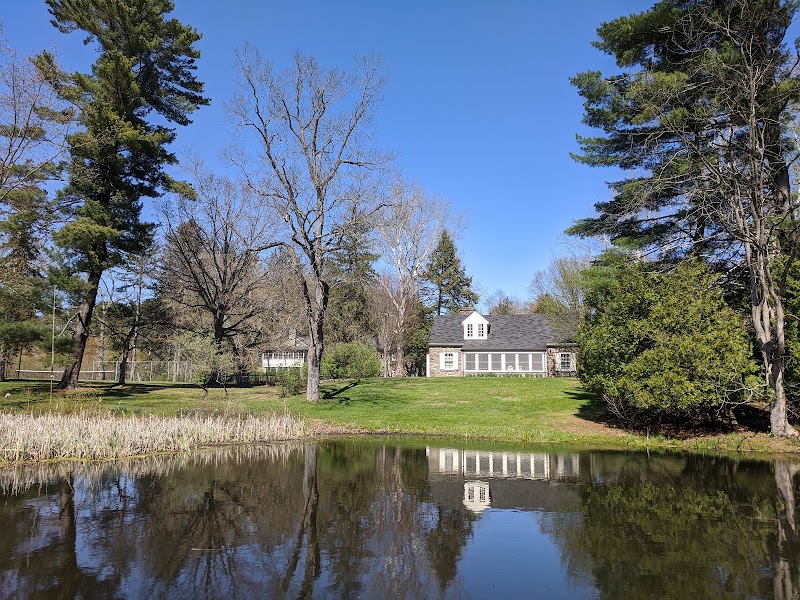
Eleanor Roosevelt's personal cottage 2 miles east of Springwood — Val-Kill is the only National Historic Site dedicated to a First Lady, established because Eleanor considered it her 'home' rather than Springwood (which was Franklin's and Sara Roosevelt's house). Val-Kill was built for Eleanor in 1925 as her personal retreat from the Springwood household (which Sara Roosevelt controlled) and was where she lived full-time after FDR's death in 1945. The cottage's small rooms, Eleanor's writing desk, the correspondence files (she averaged 150 letters per day for 40 years), and the furniture from the Val-Kill furniture workshop Eleanor co-founded to employ local craftspeople reflect her practical, non-aristocratic approach to the family wealth.
☀️
Afternoon
Vanderbilt Mansion National Historic Site — Hyde Park
4.7
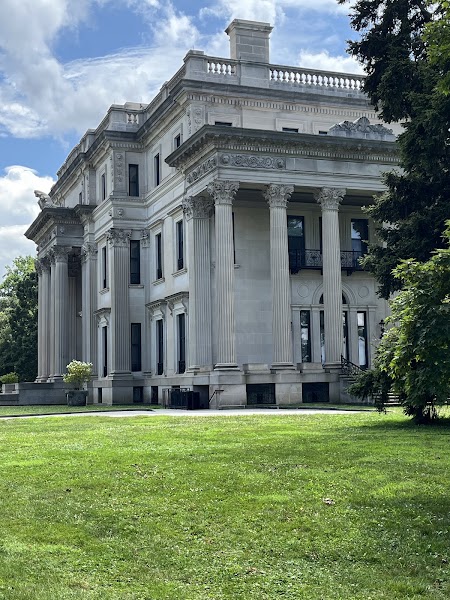
The apotheosis of American Gilded Age architecture — Frederick W. Vanderbilt's 54-room Italian Renaissance palazzo (1898, McKim Mead & White) on a 600-acre Hudson River estate that the Vanderbilts used for 6 weeks per year as a spring and fall retreat. The architects modeled the exterior on a Roman villa and the interior on the great European houses: the dining room ceiling was imported from an Antwerp townhouse (1630s); the master bedroom's bed cost $100,000 in 1898 dollars; the Italianate terraced gardens descend to the river. The estate was the most expensive single residential commission in America at its construction. Frederick Vanderbilt was Cornelius Vanderbilt's grandson; the house represents the third-generation Vanderbilt family's peak wealth and the beginning of the Gilded Age fortune's dispersal.
🌙
Evening
Beekman Arms & Delamater Hotel — Rhinebeck, NY
4.2
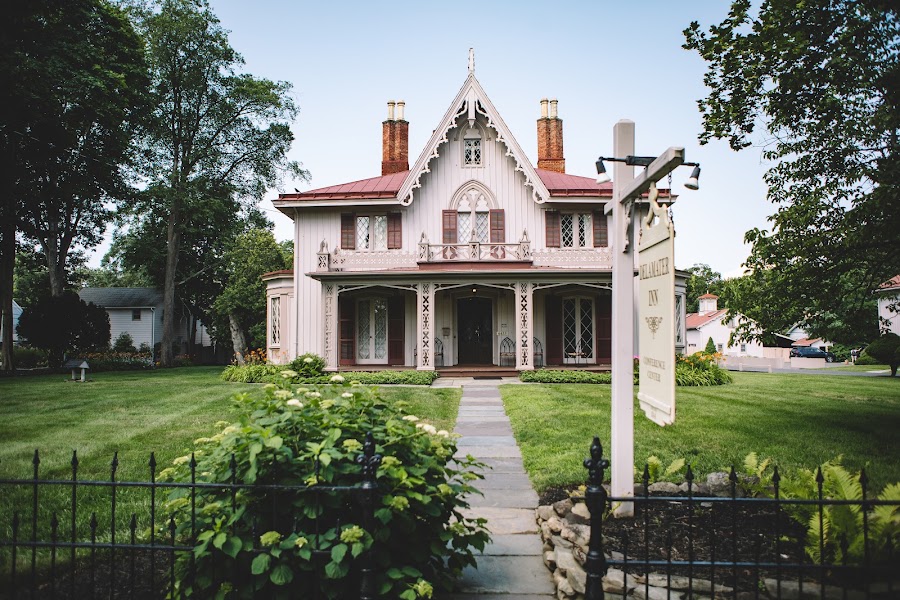
The oldest continuously operating inn in America — the Beekman Arms in Rhinebeck has operated as a public house since 1766, when it was a tavern on the Albany Post Road. Washington, Hamilton, and Philip Schuyler are documented guests from the Revolutionary period; FDR gave his final gubernatorial election speech from the front porch in 1930. The adjoining Delamater House (1844, Gothic Revival, designed by Andrew Jackson Downing, the founder of American landscape architecture) offers suites in a landmark building. Rhinebeck's village center — a well-preserved 19th-century commercial street — is within walking distance. Tomorrow's drive to Olana takes 30 minutes north on US-9.
Day 3Olana & Hudson, NY — Return to New York
Day 3Olana & Hudson, NY — Return to New York
🚗 2 hr 30 min driving📍 3 stops
🌅
Morning
🚗
Drive
Rhinebeck, NYOlana State Historic Site — Hudson, NY
30 min8:00 AM8:30 AM
Olana State Historic Site — Frederic Church's House
4.8
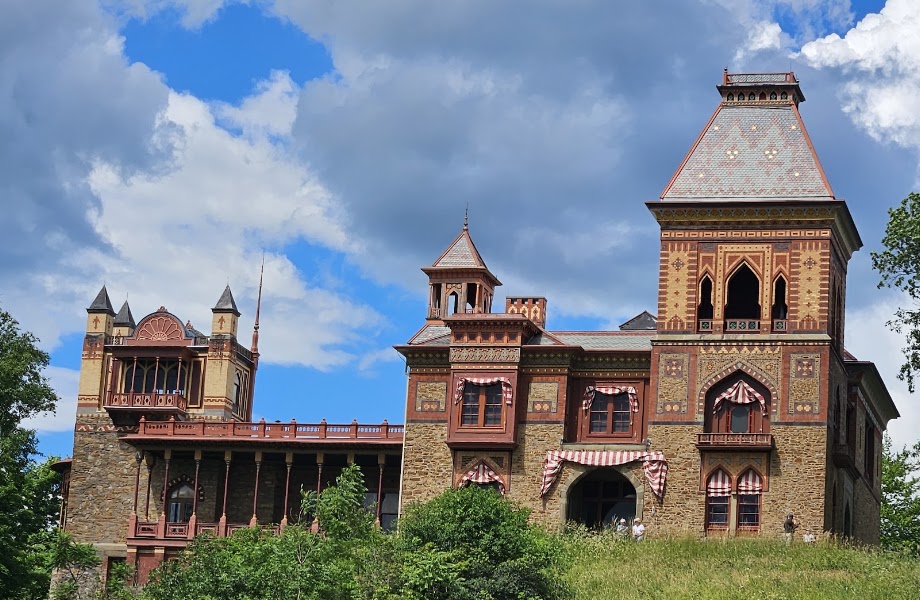
The culminating work of America's greatest 19th-century landscape painter — Frederic Church (the most famous American artist of his day, whose 'The Heart of the Andes' and 'Niagara' sold for prices that required charging admission to view them) spent 30 years designing and building Olana as a total work of art: a 250-acre designed landscape on a hilltop above the Hudson River, a Persian-Moorish villa as the focal point, and a 5-mile system of carriage roads threading through the designed landscape to create a series of framed views of the Hudson Valley. Church studied Persian and Moorish architecture during an 1867 trip to the Middle East; the polychrome tile work, the painted stencil patterns on every surface, and the arched Islamic windows make Olana unlike any other house in America. The view from the studio window — the Hudson River curving south through a landscape Church designed to frame it — is the most celebrated view in American art history.
🍽️
Lunch
Hudson, NY — Warren Street Antiques District
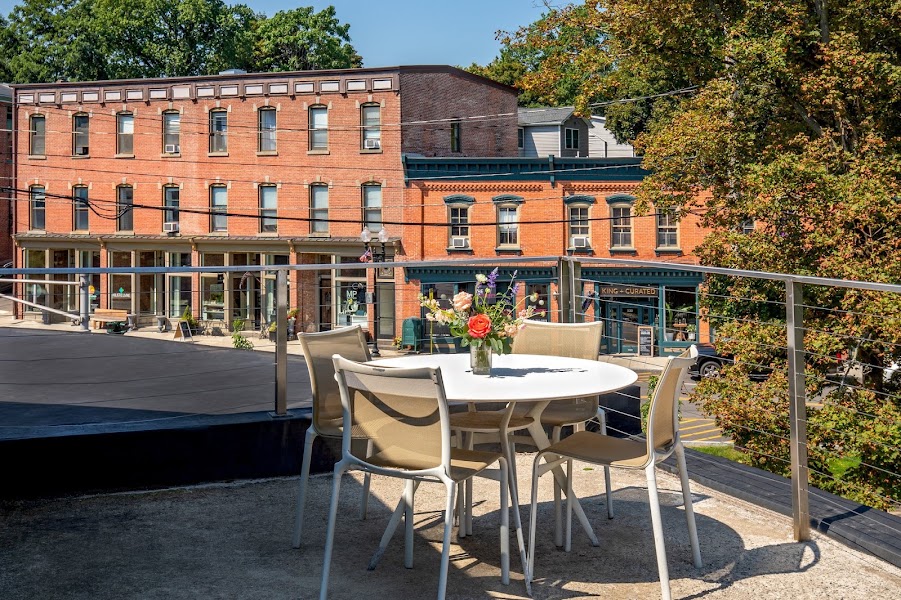
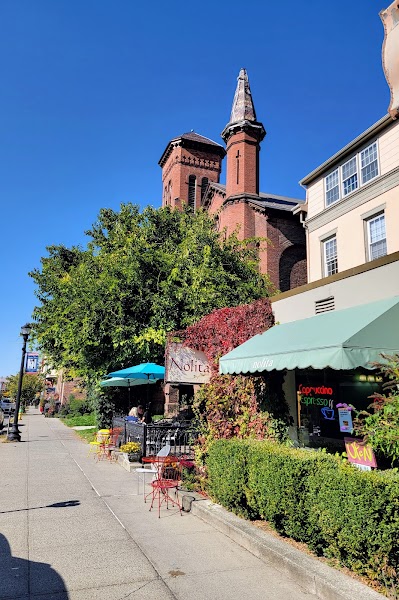
One of the most concentrated antiques districts in the United States — Hudson's Warren Street has been the antique capital of the Northeast since the 1970s, with 60+ dealers in a single 6-block Victorian commercial streetscape. Hudson was originally a whaling port (founded 1783 by Nantucket Quakers who sought a harbor safe from British naval raids) and its 19th-century prosperity left intact blocks of Federal, Greek Revival, and Italianate commercial and residential architecture. The WAAM (What About Art Museum) and the Basilica Hudson (a 19th-century industrial building converted to an art and music venue) represent the contemporary arts culture that has developed alongside the antique trade. The Olana landscape's northern edge is visible from Warren Street's upper end.
☀️
Afternoon
Hudson River School View — Catskill Mountains Overlook
5
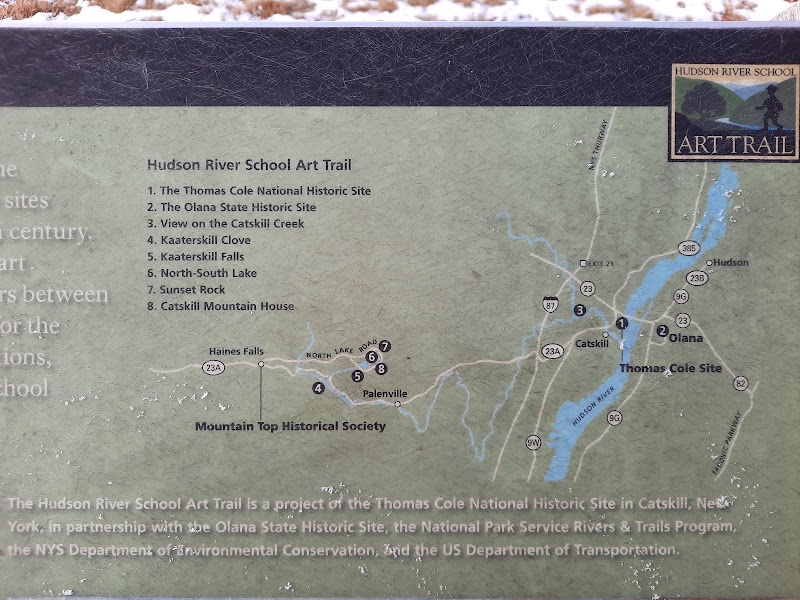
The view from Hudson's waterfront across the river to the Catskill Mountains — the same view that Thomas Cole, the founder of the Hudson River School, painted in the 1830s and 1840s from his studio in Catskill village (visible 5 miles south). Cole's studio (Thomas Cole National Historic Site, in the town of Catskill, 10 minutes south of Hudson) is the origin point of American landscape painting and the place where Cole developed the landscape allegory series 'The Course of Empire' and 'The Voyage of Life.' The Hudson waterfront park's view of the Catskills at afternoon light — the characteristic blue-purple haze that Cole called the 'luminosity' of the American landscape — is what Church, Bierstadt, and the other Hudson River School painters were attempting to capture in their studio work. Return to New York City takes 2 hours south on the Taconic State Parkway.
🌙
Evening
🚗
Drive
Hudson, NYNew York, NY
2 hr5:00 PM7:00 PM
Plan your own escapeExplore more trips →