🌿 RelaxedLong weekend · from Seattle, WA
Olympic Peninsula: Port Townsend Victorians, Hurricane Ridge & Sol Duc Hot Springs
Three unhurried days on the Olympic Peninsula — the forested, glacier-capped landmass across Puget Sound from Seattle that holds a rainforest, subalpine meadows, and an isolated hot spring in the same national park. Port Townsend's intact Victorian seaport architecture and Fort Worden's 1909 gun batteries fill the first day. Hurricane Ridge's 5,242-foot panorama over the Olympic Mountains' glaciated peaks takes the second morning; the afternoon drops into the Sol Duc Valley for forest hot springs. The third day visits Lake Crescent's glacially carved basin before the return drive.
Day 1 — Fort Worden State Park (1909 army fort, Point Wilson Lighthouse), Port Townsend Victorian Historic District, overnight Port TownsendDay 2 — Hurricane Ridge (5,242 ft, Olympic Mountain glaciers), Sol Duc Falls (three-chute 50-ft falls), Sol Duc Hot Springs ResortDay 3 — Lake Crescent Lodge (1916 NPS lodge), Marymere Falls, return Seattle
Day 1 — Port Townsend, WA
Day 1 — Port Townsend, WA
🚗 1 hr 30 min driving📍 5 stops
🌅
Morning
🚗
Drive
Seattle, WA → Fort Worden State Park — Port Townsend, WA
1 hr 30 min
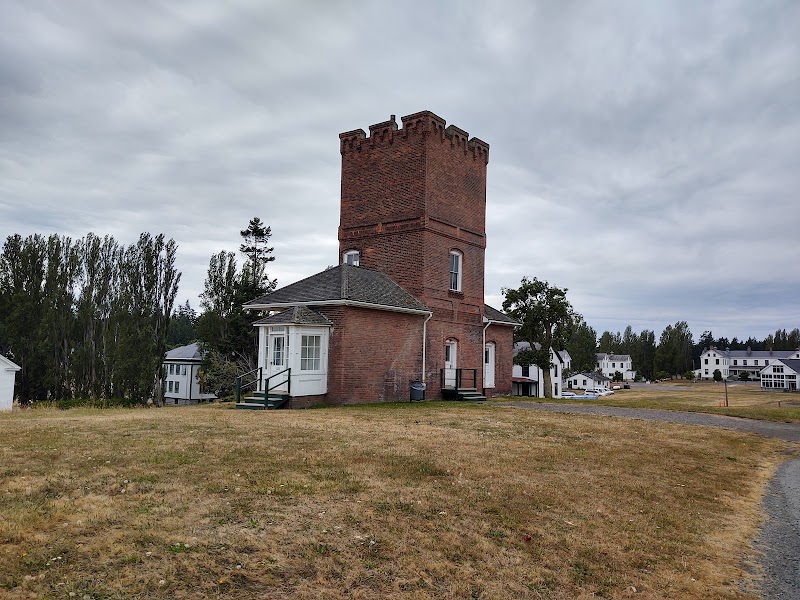
Fort Worden State Park
★ Reviews →A 1909 US Army coast artillery fort on Point Wilson at the confluence of Puget Sound, the Strait of Juan de Fuca, and Admiralty Inlet — one of three forts built together to defend Puget Sound at the turn of the century. The concrete gun batteries and fire control stations are preserved intact; Battery Kinzie and Battery Stoddard are the most dramatic, with open bunker corridors and gun platforms overlooking the water. The Point Wilson Lighthouse (1879, automated 1976) stands at the point. Fort Worden was the filming location of 'An Officer and a Gentleman' (1982); barracks buildings are now available as overnight accommodations.
~1 hr📍 See location
🍽️
Lunch
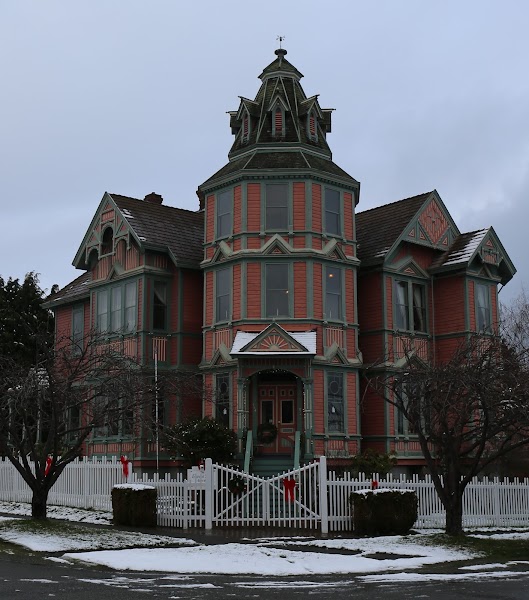
Port Townsend Victorian Historic District — Water Street
★ Reviews →Port Townsend has the densest concentration of intact Victorian-era commercial and residential architecture in the Pacific Northwest — a legacy of the 1880s boom when the town expected to become the major Pacific Northwest port and railways never arrived. Water Street's brick commercial block (1880s–1890s) is the commercial district; the residential bluffs above it (Uptown) have Queen Anne mansions overlooking the harbor and the Olympic Mountains beyond. The Jefferson Museum of Art & History in the 1892 City Hall bell tower provides context for the town's boom-and-bust history. The waterfront farmers' market and the independent bookshops along Water Street make for a good midday stop.
~1 hr📍 See location
☀️
Afternoon
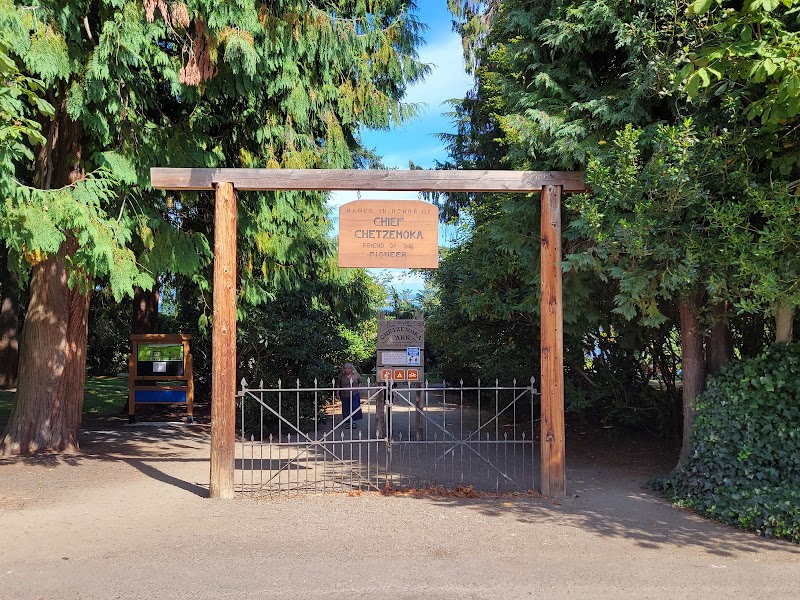
Chetzemoka Park & Port Townsend Waterfront
★ Reviews →Chetzemoka Park on the bluff above the beach — the oldest public park in Washington state (1904), with a rose garden and a view of the Strait of Juan de Fuca, the ferries crossing to Whidbey Island, and the Cascade Range on clear days. The park and beach below are the quietest afternoon stop in Port Townsend; the beach at low tide exposes tidepools along the rocky point. The Port Townsend Brewing Company on Water Street is a good late-afternoon alternative.
~1 hr📍 See location
🌙
Evening
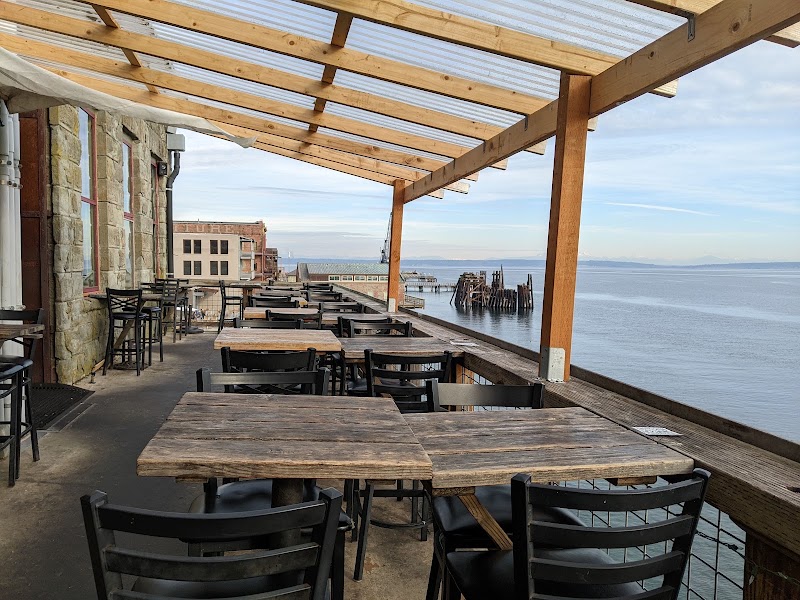
Sirens Pub
★ Reviews →Laid-back, waterfront venue offering classic bar dishes, pizzas & seafood, plus a seasonal deck.
~1 hr📍 See location
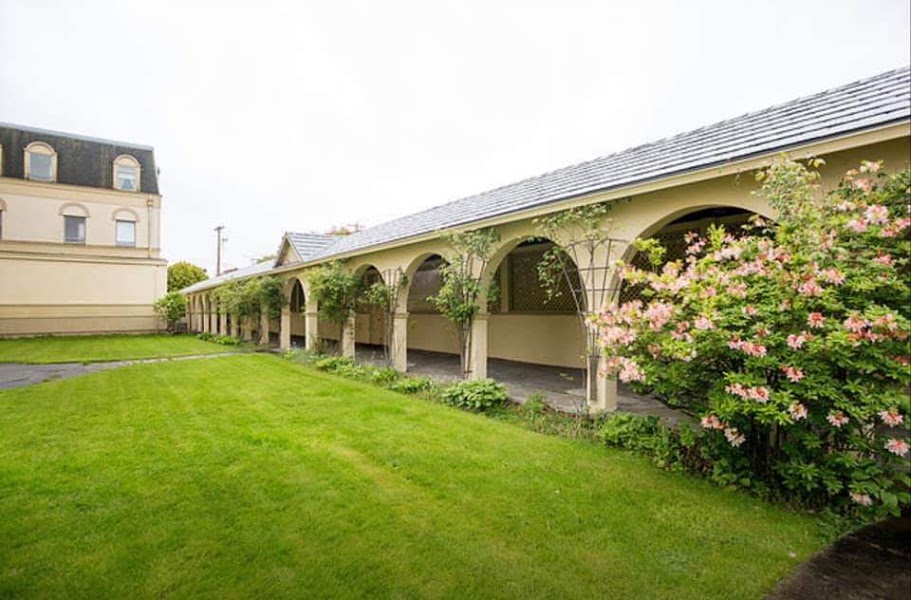
Manresa Castle — Port Townsend, WA
★ Reviews →An 1892 Prussian-inspired mansion on a bluff in Port Townsend's residential Uptown district — built by the town's first mayor, Charles Eisenbeis, to replicate his family's Prussian castle. Now a hotel, it sits directly above Water Street with a view of the harbor, the Cascades, and the ships in Puget Sound. Fort Worden State Park barracks accommodations are the alternative — comfortable converted officers' quarters and enlisted barracks available as nightly rentals.
Day 2 — Hurricane Ridge & Sol Duc Valley, Olympic NP
Day 2 — Hurricane Ridge & Sol Duc Valley, Olympic NP
🚗 3 hr 15 min driving📍 5 stops
🌅
Morning
🚗
Drive
Port Townsend, WA → Hurricane Ridge — Olympic National Park
1 hr 15 min
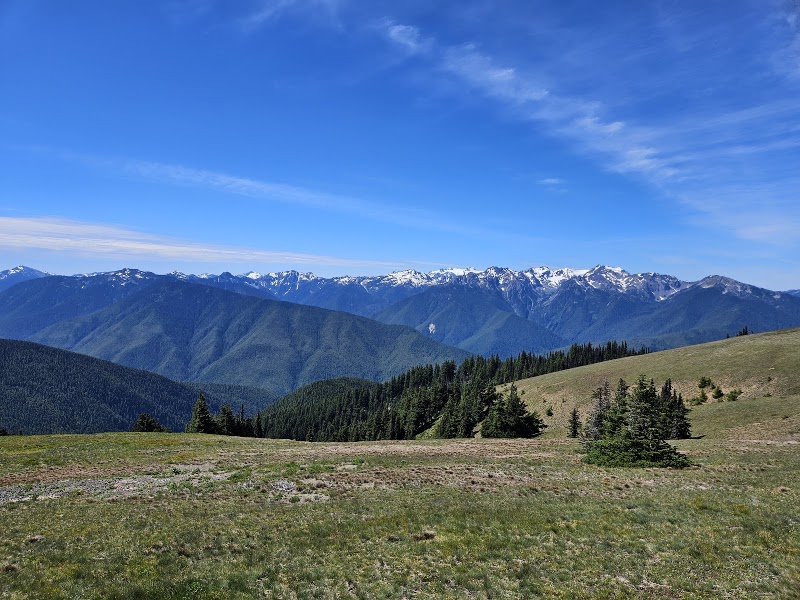
Hurricane Ridge — Olympic National Park
★ Reviews →The most accessible high-elevation viewpoint in Olympic National Park — at 5,242 feet, reached by a 17-mile paved road from Port Angeles. The ridge gives a panoramic view of the Olympic Mountains' glaciated interior, including the Blue Glacier on Mount Olympus (the largest glacier in the contiguous US outside Alaska by volume). Olympic Peninsula's elevation creates a rain shadow pattern: the ridge above gets 30 feet of snow in winter while Seattle gets 38 inches of rain. The Hurricane Hill Trail (3.2 miles round trip, 700 feet gain) gives a longer ridge walk with views of the Strait of Juan de Fuca to the north and the Bailey Range to the south. Deer are common at the visitor center.
~3 hrs📍 See location
🍽️
Lunch
🚗
Drive
Hurricane Ridge, Olympic NP → Sol Duc Falls — Sol Duc Valley, Olympic NP
2 hr
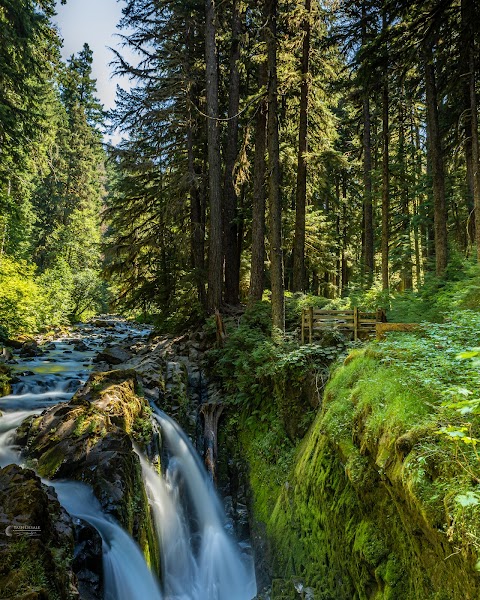
Sol Duc Falls — Olympic National Park
★ Reviews →The Sol Duc River splits into three separate channels that drop simultaneously into a single narrow canyon — a 0.8-mile flat trail from the Sol Duc Hot Springs Resort trailhead leads through old-growth Pacific silver fir forest (trees 300-500 years old) to a footbridge directly above the falls. The falls drop 50 feet; the canyon below is too narrow for the full river volume and the water churns white through a mossy slot. The Elwha Klallam legend describes Sol Duc as one of two rival dragons who fought and, wounded, retreated to become hot springs — the Sol Duc Hot Springs and the Olympic Hot Springs are both within a day's walk of each other.
~1.5 hrs📍 See location
☀️
Afternoon
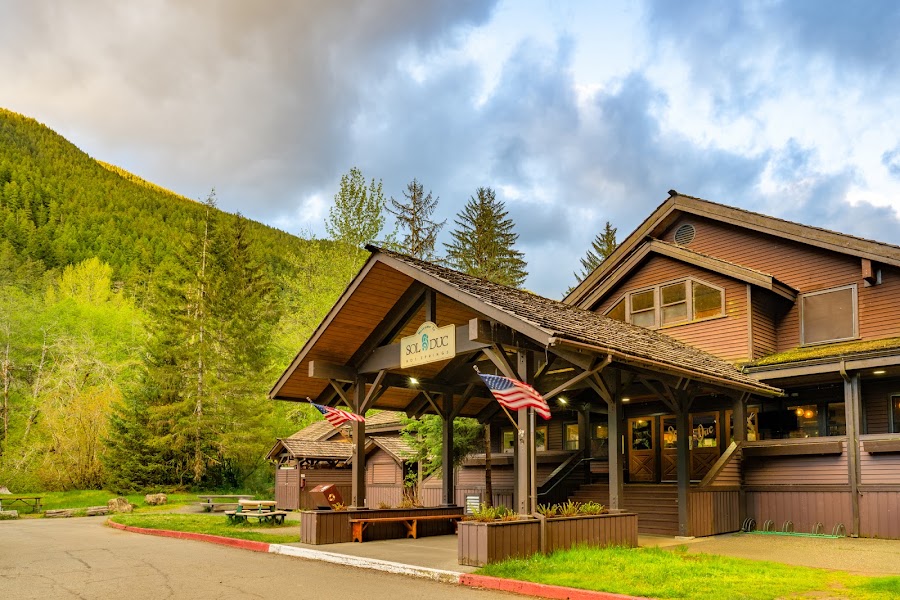
Sol Duc Hot Springs Resort — Mineral Pools
★ Reviews →Three outdoor mineral pools fed by the Sol Duc Hot Springs — sodium-sulfate waters emerging at 128°F and cooled to bathing temperature (98-104°F) in the largest pool, cooler in the freshwater pool. The resort and hot springs have been in continuous use for over a century; the Lower Elwha Klallam people used the springs for healing before European contact, and the springs were developed as a commercial resort in 1912. The setting in an old-growth river valley, surrounded by Douglas fir and Sitka spruce above 200 feet tall, makes the soaking experience unusually quiet for a developed Olympic NP facility.
~1 hr📍 See location
🌙
Evening
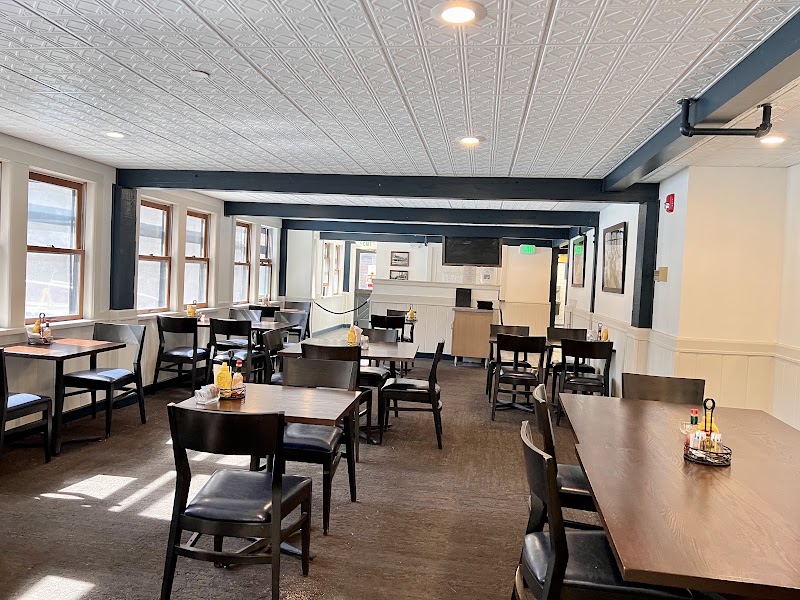
The Springs Restaurant at Sol Duc Hot Springs
★ Reviews →A well-regarded dinner spot near Sol Duc Hot Springs Resort.
~1 hr📍 See location
Sol Duc Hot Springs Resort — Cabins
★ Reviews →NPS-managed resort cabins in the old-growth Sol Duc Valley — a cluster of 1960s-era cabin units in a forested setting, with the hot springs pools a short walk away. The dining room serves breakfast and dinner. There are no cell signals in the Sol Duc Valley. Lake Crescent Lodge (30 minutes east) is the alternative for those preferring a lake setting over forest.
~30 min📍 See location
Day 3 — Lake Crescent — Return to Seattle
Day 3 — Lake Crescent — Return to Seattle
🚗 3 hr 30 min driving📍 3 stops
🌅
Morning
🚗
Drive
Sol Duc Hot Springs Resort → Lake Crescent Lodge — Olympic National Park
30 min
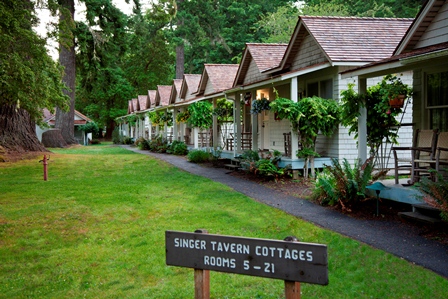
Lake Crescent Lodge — Olympic National Park
★ Reviews →The 1916 NPS lodge on the south shore of Lake Crescent — a glacially carved lake 624 feet deep (the fourth deepest lake in Washington) with water so clear and low in nitrogen that it stunts aquatic plant growth, giving the surface a vivid deep blue color. The lodge is the oldest structure in Olympic National Park still in continuous use; President Franklin Roosevelt visited in 1937 (the visit accelerated Olympic's designation as a national park in 1938). Rowboats are rented from the lodge dock; the lake is too cold for comfortable swimming but the rowing on the mirror-flat morning surface is the reason to arrive early.
~1 hr📍 See location
🍽️
Lunch
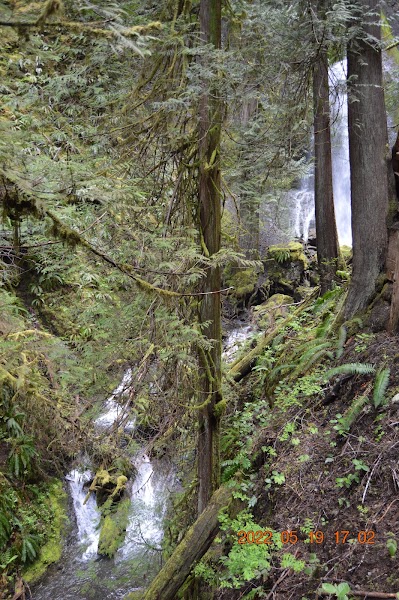
Marymere Falls Trail — Lake Crescent
★ Reviews →A 2.0-mile round-trip trail from the Storm King Ranger Station on Lake Crescent's south shore — the flat first mile passes through old-growth Douglas fir and bigleaf maple (the maple trunks are covered in club moss that holds moisture through the dry Olympic rain shadow summers), then a short climb reaches Marymere Falls: a 90-foot waterfall dropping through a fern-covered grotto into a plunge pool. The grotto is reliably cool even in August; the curtain of maidenhair fern on the surrounding rock faces is the most lush single plant community in Olympic National Park.
🥪No food at the falls — pack a trail lunch.
~1 hr📍 See location
☀️
Afternoon
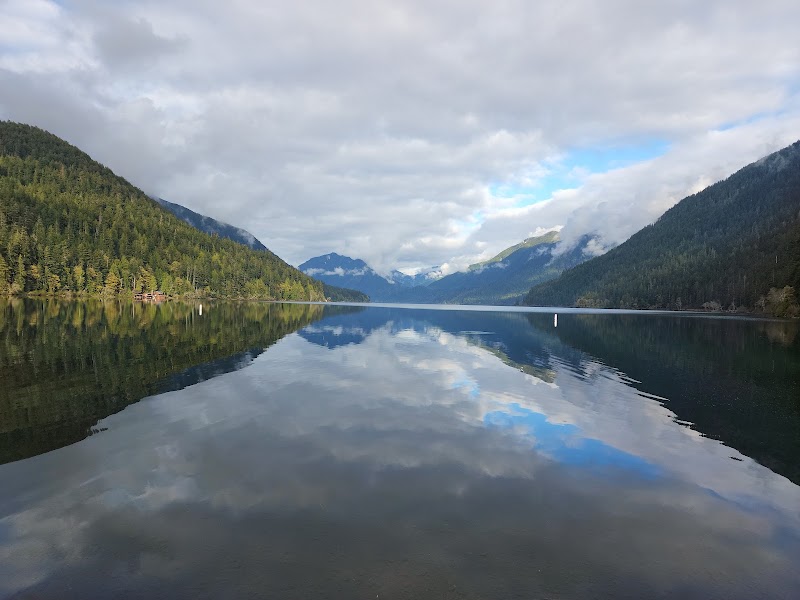
Crescent Lake Viewpoints — US-101 Return Drive
★ Reviews →The US-101 drive along Lake Crescent's north shore (past the Barnes Point viewpoint and the lake's east end) gives a final look at the lake from above before the highway climbs out of the Olympic NP boundary toward Port Angeles. The drive east from Port Angeles follows the Strait of Juan de Fuca through Sequim (the 'banana belt' of the Olympic rain shadow — 16 inches of annual rainfall versus Seattle's 38, supporting a lavender industry in July and August) before the ferry crossing back to the Sound.
~1 hr📍 See location
🌙
Evening
🚗
Drive
Lake Crescent, Olympic NP → Seattle, WA
3 hr
← All Seattle trips
More getaways from Seattle
Ridgeline Views & Cascade Falls — Day trip🥾Volcanic Summits & Victorian Waterfront — Weekend🥾Glacial Lakes, Alpine Passes & Wild West Towns — Long weekend🥾Victorian Waterfront & Northwest Arts — Day trip🏛️Bavarian Alps & Wild West Frontier — Weekend🏛️Viking Ports, Dutch Heritage & Tulip Valley — Long weekend🏛️Island Village & Saratoga Shores — Day trip🌿Bavarian Village & Glacier Lake Wineries — Weekend🌿
© 2026 theweekendgetaways.com · All itineraries are original content. Terms
Plan your own escapeExplore more trips →