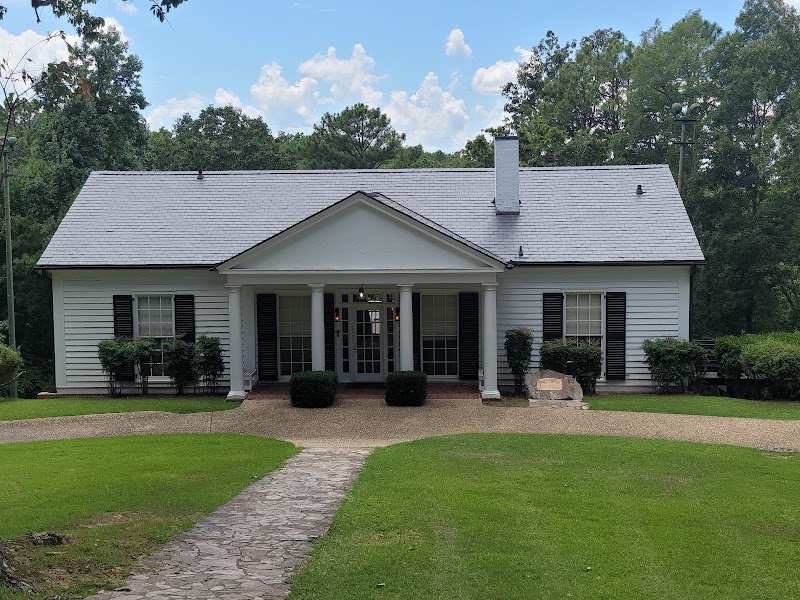
Franklin Roosevelt first came to Warm Springs in 1924, drawn by reports that the town's warm 88-degree mineral springs had helped a polio survivor regain partial use of his legs. Roosevelt had contracted infantile paralysis three years earlier, at age 39, and had been searching ever since for some path back to physical strength. He found in those spring-fed pools a buoyancy and warmth that he claimed genuinely strengthened his paralyzed legs, and he returned again and again — eventually 89 times between 1924 and 1945 — making Warm Springs a second home. In 1927 he established the Georgia Warm Springs Foundation to bring other polio patients to the waters, financing their treatment out of his own pocket before the institution grew into the seed of what would become the March of Dimes. In 1932, before he had won the presidency, he built himself a modest six-room cottage of Georgia pine on the hillside above town — plain and unpretentious, with a broad porch suited to a Southern summer, costing just $8,738.
On April 12, 1945, Roosevelt was sitting in the cottage's living room for a portrait by the artist Elizabeth Shoumatoff when he suffered a massive cerebral hemorrhage. He lost consciousness within minutes and died that afternoon, less than a month before Germany's surrender ended the war in Europe he had spent twelve years preparing for and fighting. The Georgia cottage was the one he had chosen for himself, not Warm Springs's grand resort hotel but a simple dwelling suited to the private man behind the public figure. The Little White House has been preserved almost exactly as it was that day: the unfinished Shoumatoff portrait still stands on its easel, the small card table where Roosevelt was sitting remains in position, and his wheelchair — the lightweight kitchen chair he had modified for mobility — sits nearby. The warm spring itself, still flowing on the property, is accessible along a short path through the woods, and the simple pool where FDR exercised with other polio patients has been restored. Lucy Rutherfurd, the companion with whom he had maintained a long and complicated friendship, had arranged the portrait sitting and was present in the cottage when he collapsed.