← The Weekend Getaways
🌿 RelaxedDay trip · from Las Vegas, NV

Pioneer Country: Snow Canyon, Brigham Young's Winter Home & Red Rock Towns

Two hours northeast of Las Vegas along I-15, the red rock canyon country of Utah's Dixie region opens into one of the American Southwest's most visually arresting and historically layered day-trip landscapes — Snow Canyon State Park, where 180-million-year-old Entrada sandstone walls rise in salmon-pink sweeps above 27,000-year-old black lava flows in a collision of geological eras unlike anything in Nevada. The afternoon unwinds in St. George's remarkably intact pioneer historic district, anchored by the white sandstone 1877 LDS Temple — the first completed by the Mormon settlers after reaching Utah — and the 1873 adobe winter home of Brigham Young, who came to southern Utah's mild winters to nurse his rheumatism in the final years of his life.

Day 1 — Snow Canyon State Park & St. George, UT
Day 1St. George & Snow Canyon, UT

Day 1St. George & Snow Canyon, UT

🚗 4 hr 15 min driving📍 8 stops
🌅
Morning
🚗
Drive
Las Vegas, NVSnow Canyon State Park, Ivins, UT
2 hr8:00 AM10:00 AM
Snow Canyon State Park — Canyon Drive & Overlooks
4.9
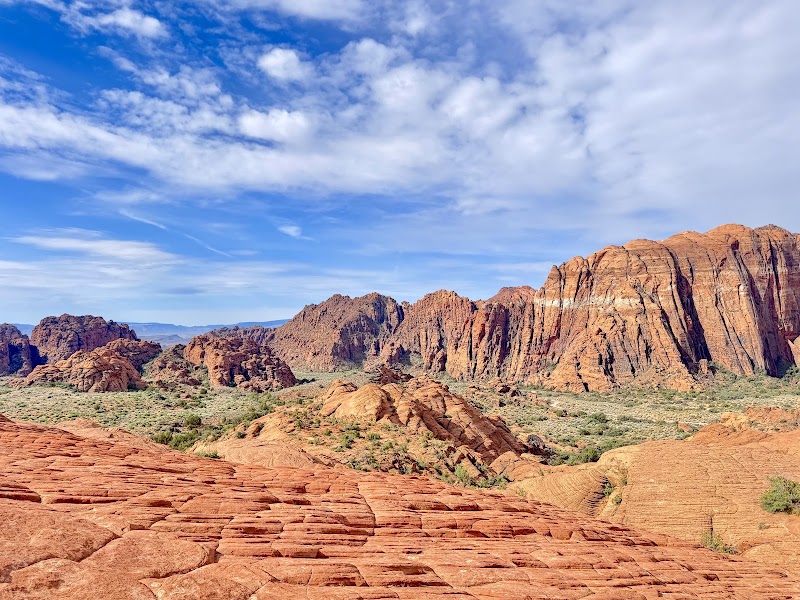
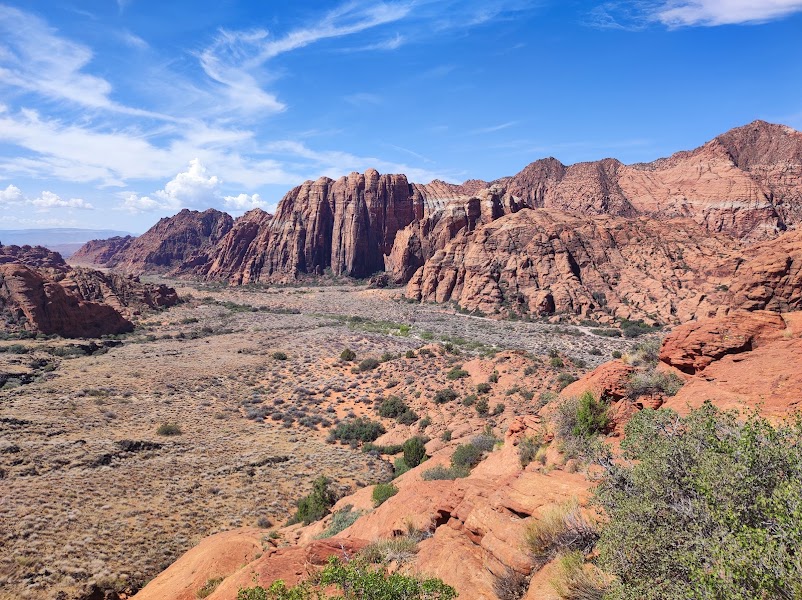
Snow Canyon State Park encompasses 7,000 acres of the Santa Clara River Valley northwest of St. George, where the juxtaposition of two radically different geological eras creates one of the most visually complex landscapes in the American Southwest. The canyon walls are Entrada sandstone approximately 180 million years old — a lithified Jurassic dune field deposited when this part of the Colorado Plateau was buried under an inland sea of sand comparable to the modern Sahara. The cross-bedded strata within the sandstone record individual ancient dune slipfaces in sweeping curved laminations of red, cream, and buff, and the canyon walls rise 50 to 750 feet from the canyon floor in sheer vertical faces and rounded domes that glow salmon-pink in morning light. Cutting across and pooling against the base of these ancient walls are black basaltic lava flows erupted from nearby cinder cones between 10,000 and 27,000 years ago — still visually fresh, rough-surfaced, and barely weathered compared to the smooth sandstone. The park road follows the canyon floor for several miles with pullouts revealing the dramatic sandstone-lava contact at multiple angles: the boundary between red Jurassic sand and black Pleistocene basalt is one of the most visually arresting geological unconformities accessible by car in the region.
Petrified Sand Dunes Trail
4.9
The Petrified Sand Dunes Trail near Snow Canyon's north entrance traverses a landscape of frozen Navajo sandstone dune forms — outcrops of ancient dune rock eroded by wind and rain into rounded, wave-like ridges and hollows that preserve the original geometry of the dunes that existed here 180 million years ago. Walking across the petrified dune field, the cross-bedded strata are visible in every exposed rock face: thin diagonal laminations representing individual dune slipfaces, each set of laminae corresponding to a different wind direction episode in the Jurassic past, stacked and truncated as successive dune migrations buried and reworked the surface. The surface has been polished smooth in places by millennia of sand abrasion, and small solution pockets and honeycomb weathering patterns mark where rainwater has selectively dissolved the weakly cemented sandstone grains. The short trail requires no technical ability and is suitable for all fitness levels, making it the ideal first stop for a relaxed day-trip group.
🍽️
Lunch
Snow Canyon Picnic & Lava Flow Walk
4.8
Snow Canyon's picnic areas along the canyon floor road offer shaded tables beneath cottonwoods near the lava flow margins — a pleasant lunch spot with the black basalt surface just steps away. A short walk out onto the lava reveals the two main lava textures visible in the park: aa lava (rough, clinkery, difficult to walk on), produced when the cooling surface of a faster-moving flow broke into jagged fragments, and pahoehoe (smooth, ropy, with billowing surface forms), produced by slower-moving, more gas-rich lava that cooled in rolling waves. The volcanic cinder cones at the park's north end are visible from the road as classic Strombolian cones with steep sides and summit craters — they erupted geologically recently enough that their forms remain nearly pristine, with minimal erosion softening their angular profiles. For those who prefer a restaurant, Xetava Gardens Café at the park entrance is a 5-minute drive away.
12:00 PM📍 See location
🍽️ Lunch1:00 PM
Xetava Gardens Café — Lunch
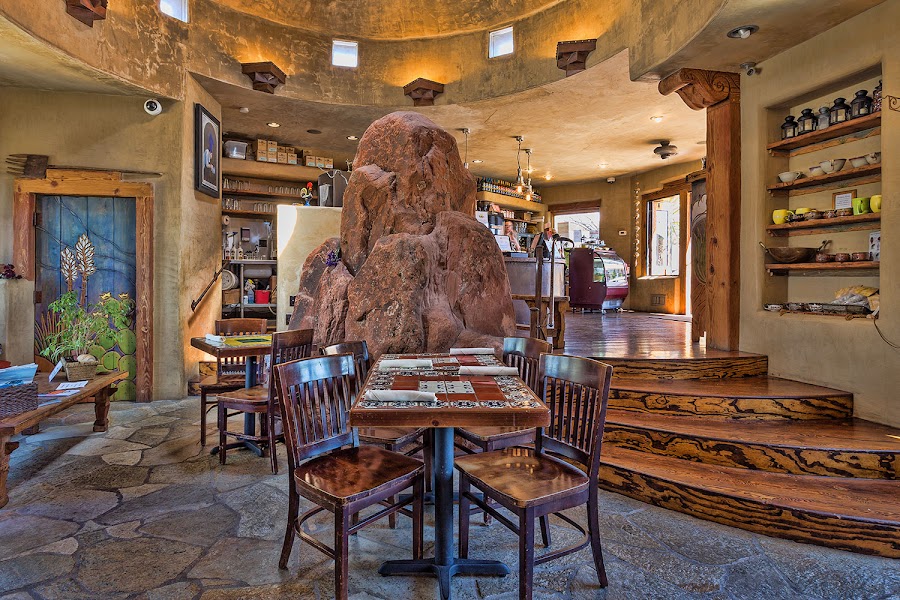
Xetava Gardens Café sits directly adjacent to Snow Canyon State Park's main entrance in Ivins — the name is 'Azteca' spelled backward, a nod to the Aztec sandstone canyon visible from every table on the outdoor patio. The café is celebrated for its garden setting shaded by native plantings, its fresh and locally-influenced menu, and the improbable quality of the cooking for such a remote location. It is a favorite among St. George residents driving up for lunch with the red canyon walls as backdrop.
4.6$$restaurant📍 Maps →
3 options · tap to switch
☀️
Afternoon
🚗
Drive
Snow Canyon State ParkSt. George Historic District
15 min2:00 PM2:15 PM
Brigham Young Winter Home & Historic Site
4.8
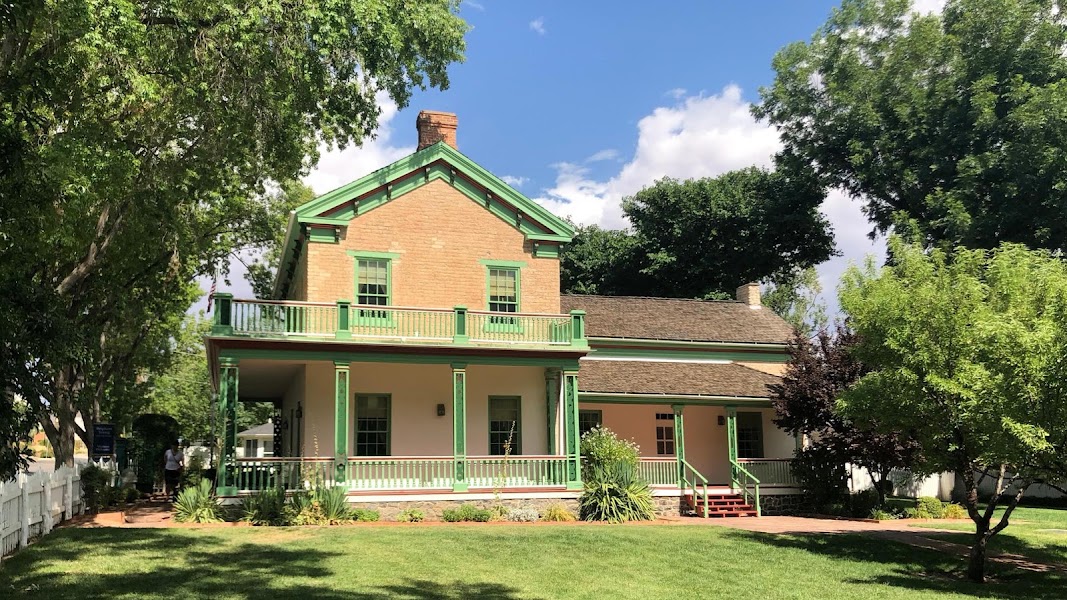
The Brigham Young Winter Home at 67 West 200 North in St. George is a beautifully preserved adobe territorial-style house built in 1873 for the second president of the Church of Jesus Christ of Latter-day Saints, who suffered from severe rheumatism and spent his final winters in the mild climate of Utah's Dixie region. Young directed the colonization of southern Utah from this home during his winter residencies, receiving church leaders and government officials in the parlor while overseeing the construction of the nearby St. George Temple, which he dedicated just months before his death in 1877. The Utah State Parks-operated historic site is open for free guided tours that move through the home's period-furnished rooms — including Young's private office, the parlor where he received visitors, and the kitchen wing — with guides contextualizing the home within the broader story of the Mormon pioneer settlement of the Great Basin. The adjacent 1875 St. George Social Hall, visible from the home's front yard, served as the cultural and theatrical center of the pioneer community.
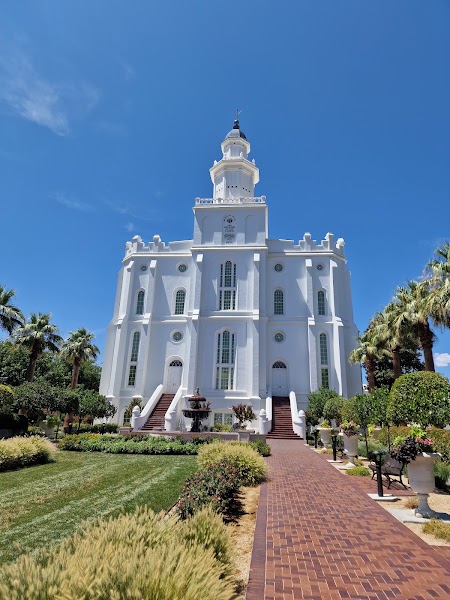
St. George Utah Temple
4.9
The St. George Utah Temple, rising in white Utah sandstone at the center of the city's historic grid, was the first temple completed by members of the Church of Jesus Christ of Latter-day Saints after reaching the Utah Territory — its construction spanning 1871 to 1877 under conditions of genuine frontier hardship, with settlers hauling volcanic black rock from nearby lava fields for the foundation and quarrying white sandstone from local cliffs for the walls. The temple's Gothic Revival tower and cream-white walls have anchored the St. George skyline for nearly 150 years and remain in active use as an LDS temple, meaning the interior is not open to non-members — but the beautifully landscaped grounds are open to all visitors, and the adjacent Temple Visitors Center offers a detailed interpretive exhibit about the temple's construction and the pioneer history of Utah's Dixie. The building was added to the National Register of Historic Places in 1974, and the view of its white tower rising above the surrounding red rock landscape is one of the most iconic images of pioneer-era Utah.
🌙
Evening
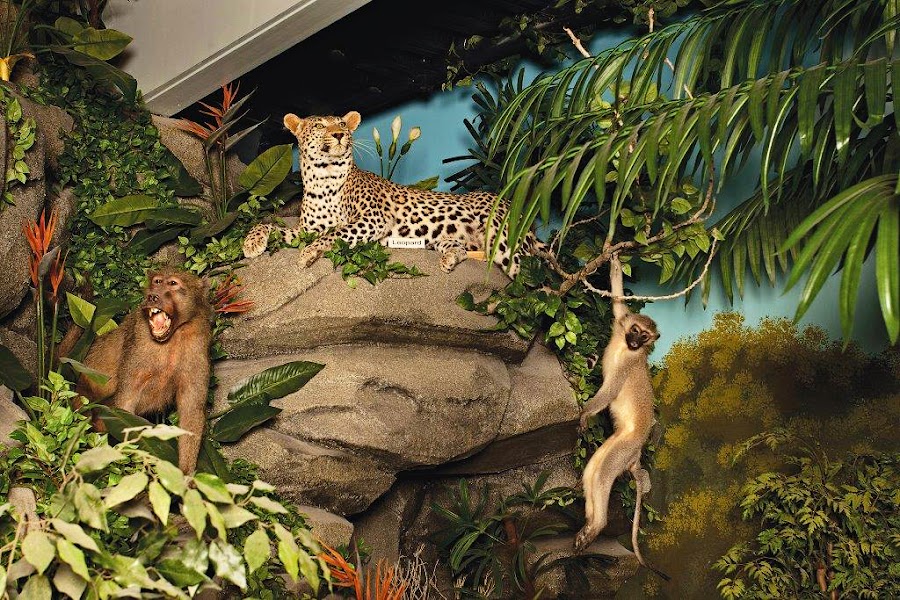
Rosenbruch Wildlife Museum
4.5
The Rosenbruch Wildlife Museum is one of the most unexpectedly impressive museums in southern Utah — a 27,000-square-foot facility housing over 300 life-size mounted animals in meticulously recreated habitat dioramas spanning all six continents, assembled by St. George businessman Jim Rosenbruch over decades of international travel and created as a testament to global wildlife diversity and conservation. The dioramas are executed with a naturalism and ecological attention to detail that rivals major natural history museums: African savanna scenes with multiple species interacting at a waterhole, Arctic tundra displays with polar bears on pack ice, and North American forest environments with black bears, mountain lions, and elk posed in realistic behavioral tableaux. The museum opened to the public in 2003 and has become one of St. George's most popular cultural attractions, particularly for families looking for an air-conditioned late-afternoon activity before the drive home.
🍽️ Dinner6:00 PM
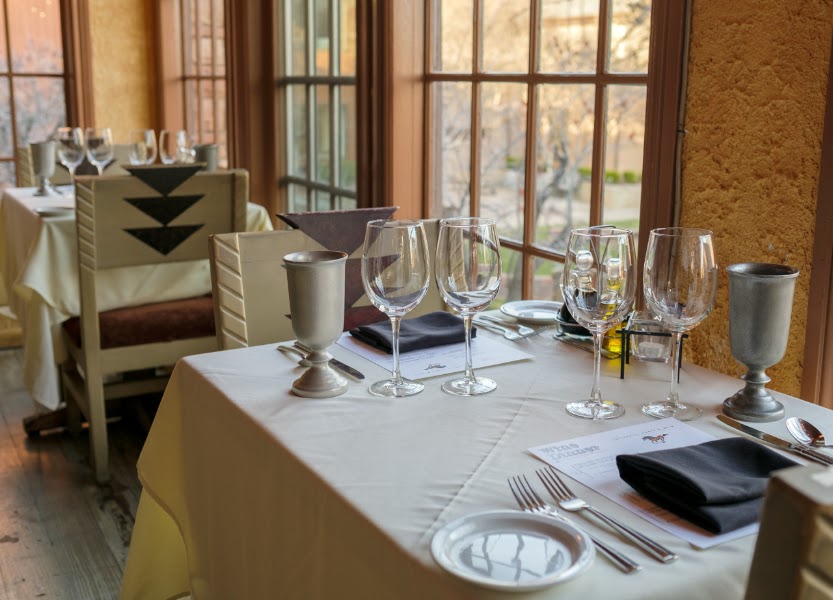
Painted Pony Restaurant — Dinner
The Painted Pony is St. George's most acclaimed fine-dining restaurant, serving upscale New American cuisine in a warmly decorated space in Ancestor Square — the historic commercial block at the heart of downtown. Known for inventive preparations using seasonal local ingredients, the restaurant is widely regarded as the best dinner option in the region.
4.6$$fine dining restaurant📍 Maps →
3 options · tap to switch
🚗
Drive
St. George, UTLas Vegas, NV
2 hr7:00 PM9:00 PM
Plan your own escapeExplore more trips →