🥾 ActiveLong weekend · from Philadelphia, PA
Catskills Circuit: Kaaterskill Falls, Escarpment Views & Minnewaska Sky Lakes
Three days of hiking push north from Philadelphia into the Catskill Mountains of New York State, where the highest two-tiered waterfall in the eastern United States tumbles 260 feet through a hemlock gorge that inspired the Hudson River School of American painting. The second day explores the Catskill Escarpment's North-South Lake area — where grand 19th-century resort hotels once stood above thousand-foot cliffs — and the third day reaches Minnewaska State Park Preserve atop the Shawangunk Ridge, where sky lakes of startling clarity sit in a landscape of dwarf pine barrens unique in the world.
Day 1 — Kaaterskill Falls, NYDay 2 — North-South Lake & Hunter Mountain, NYDay 3 — Minnewaska State Park, NY
Day 1 — Catskill, NY
Day 1 — Catskill, NY
🚗 2 hr driving📍 7 stops
🌅
Morning
🚗
Drive
Philadelphia, PA → Kaaterskill Falls, Greene County, NY
2 hr
Drive north via I-78 N to I-87 N (New York State Thruway) to Exit 20 at Saugerties, then NY-32 N and NY-23A W through the Kaaterskill Clove to the trailhead.
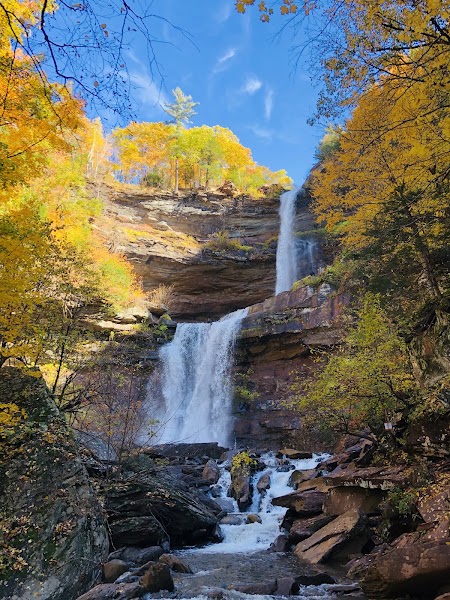
Kaaterskill Falls
★ Reviews →The highest two-tiered waterfall in the eastern United States — the upper tier drops 175 feet in a single free fall, and the lower tier adds another 85 feet for a combined drop of 260 feet through a hemlock gorge so dramatic that it became the most celebrated natural landmark in 19th-century America. Thomas Cole painted Kaaterskill Falls in 1826, triggering a cascade of artistic pilgrimage that established the Hudson River School of landscape painting; Asher Durand, Sanford Gifford, Frederic Church, and William Cullen Bryant all came to paint, hike, and philosophize here. The 1-mile trail from the Laurel House Road trailhead climbs steeply through old-growth hemlock to the base of the upper falls, where the amphitheater cave behind the falling water is accessible in low-water conditions — a cathedral-like alcove where you stand behind the curtain and feel the spray and thunder from inside. In spring snowmelt the volume is overwhelming; in autumn the gorge walls blaze with maple and birch.
~1.5 hrs📍 See location
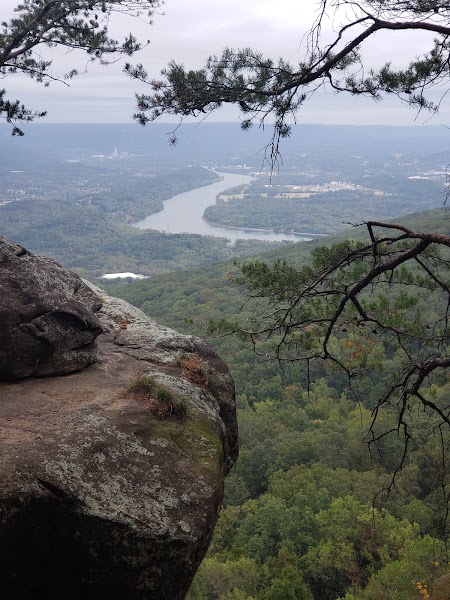
Escarpment Trail to Sunset Rock and Santa Cruz Lookout
★ Reviews →A 2-mile hike above Kaaterskill Falls along the Catskill Escarpment on the blue-marked Long Path — one of the finest ridge walks in the Northeast, running above the cliff edge with views down the Hudson Valley to the Shawangunks, the Taconics, and on clear days the distant Berkshires. Sunset Rock was a favored viewpoint of the Hudson River School painters, who would set up their easels on the exposed sandstone promontory as the afternoon light turned the Hudson Valley to gold and the Catskill slopes deepened to blue. The trail passes through the same hemlock and northern hardwood forest that appears in the backgrounds of Cole's and Church's most famous paintings.
~1.5 hrs📍 See location
🍽️
Lunch
🍽️ Lunch~1 hr
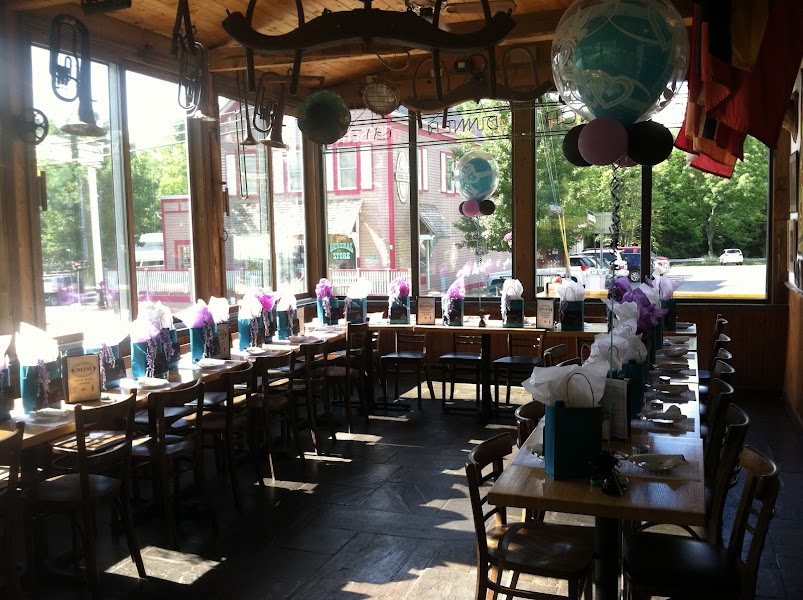
Last Chance Antiques & Cheese Café
A Tannersville institution in a converted Victorian building on NY-23A — half antique shop, half café serving house-made soups, sandwiches, and local cheeses to hikers coming off the Escarpment Trail and Kaaterskill Falls. The eclectic interior mixes Catskill Mountain folk art, antique furniture, and a genuinely warm kitchen operation that sources cheese from the Delaware County dairies to the west.
4 options · tap to switch
☀️
Afternoon
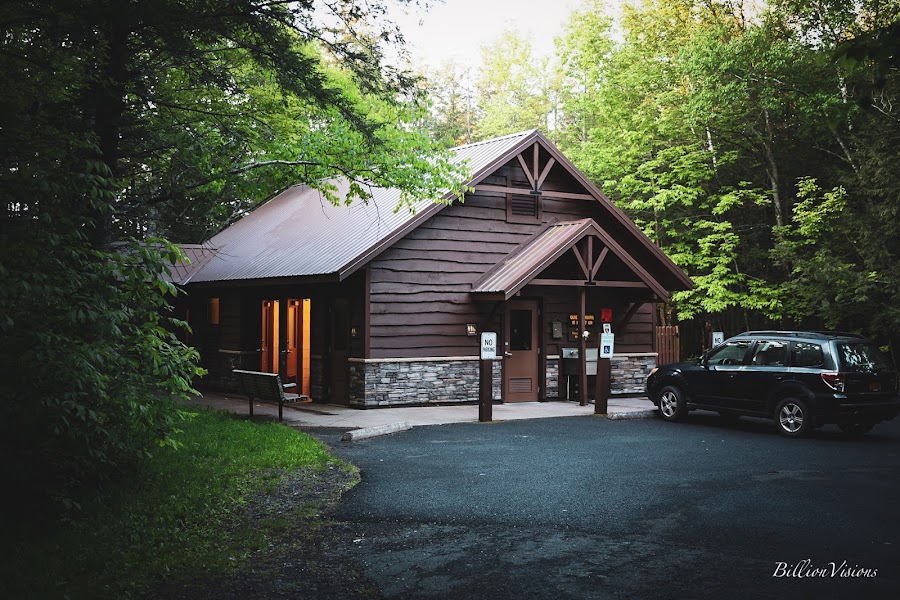
North Lake State Campground — Catskill Mountain House Site
★ Reviews →The North Lake area near Haines Falls preserves the most historically resonant site in the Catskills — the plateau where the Catskill Mountain House stood from 1823 to 1963 as the most famous hotel in 19th-century America. The Mountain House occupied a 2,000-foot sandstone ledge above the Hudson Valley with a view that travel writers described as the finest in the Western Hemisphere; Thomas Cole painted it, James Fenimore Cooper described it in The Pioneers, and Abraham Lincoln, Ulysses S. Grant, and Mark Twain all stayed here. The hotel was demolished by the state in 1963 after years of dereliction; the stone terrace where guests gathered to watch the sunrise color the Hudson Valley from above the clouds survives at the edge of the escarpment. A walk from the campground to the terrace site, through the ghost landscape of the former hotel grounds, is one of the strangest historical experiences in the Northeast.
~1.5 hrs📍 See location
Catskill Center for Conservation and Development
★ Reviews →The Catskill Center's interpretive programming covers the geology and ecology of the Catskill Mountains and the extraordinary fact that New York City's entire drinking water supply — 1.1 billion gallons per day — comes from 19 reservoirs in the Catskill watershed managed without filtration, the largest unfiltered water supply in the world. The Catskill watershed's clean water is protected by land conservation and farming agreements rather than treatment plants, making the relationship between the Catskill forest and the 9 million people who drink from it one of the most consequential conservation arrangements in North America.
~1 hr📍 See location
🌙
Evening
🍽️ Dinner~1 hr
The Pines Restaurant
A Hunter, NY dinner institution serving Catskill farm cuisine to the ski and hiking crowd in a warm, wood-paneled room with a serious cocktail program and a wine list weighted toward small New York producers. The menu runs from local venison and duck to house-made pasta with Catskill mushrooms; the bar has over 80 American whiskeys.
4 options · tap to switch
🛏️
Scribner's Catskill Lodge or The Tannersville Inn
Scribner's Catskill Lodge is a beautifully renovated mid-century motel above Hunter with mountain views, a heated outdoor pool, and proximity to both the falls and the escarpment trails. The Tannersville Inn is a more affordable village option on NY-23A within walking distance of Tannersville's restaurants and cafés.
Day 2 — North-South Lake, NY
Day 2 — North-South Lake, NY
🚗 20 min driving📍 8 stops
🌅
Morning
🚗
Drive
Hunter, NY → North-South Lake Campground, Haines Falls, NY
20 min
Short drive east on NY-23A through the Kaaterskill Clove to the North Lake Road trailhead above Haines Falls.
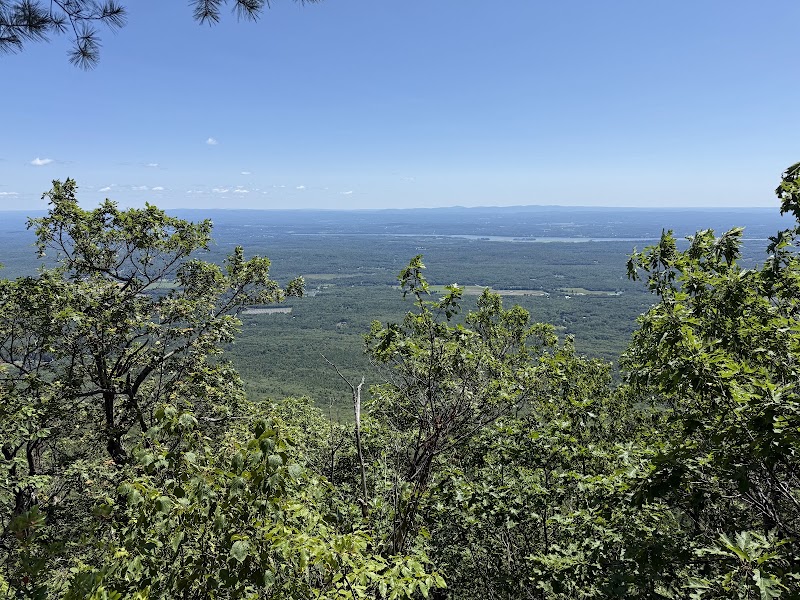
North-South Lake Escarpment Walk
★ Reviews →The 2-mile escarpment trail from the North Lake campground runs along the cliff edge past the sites of three grand Catskill resort hotels — the Catskill Mountain House (1823-1963, the most famous hotel in 19th-century America), the Hotel Kaaterskill (1881-1924, the largest wooden hotel ever built in the United States, capable of housing 1,200 guests), and the Laurel House (1852-1967, built directly above Kaaterskill Falls). The trail passes Sunset Rock, North Point, and Boulder Rock, each offering views of the Hudson Valley that extend more than 100 miles on clear autumn days. Walking this escarpment is walking through the ruins of American leisure at its most ambitious: the mountain resort culture that built these extraordinary hotels on a remote ridge in the 1870s-1880s to serve the wealthy of New York and Philadelphia who arrived by steamboat and railroad.
~2.5 hrs📍 See location
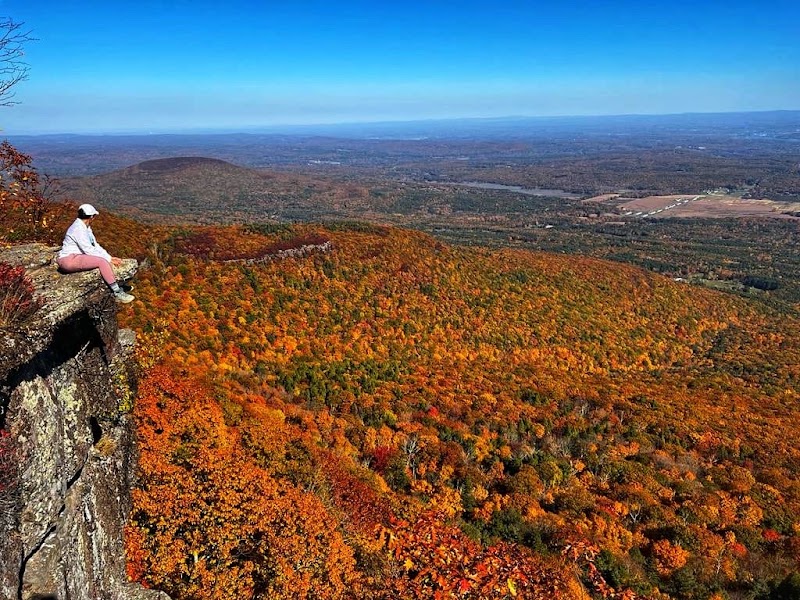
Artist Rock and Newman's Ledge
★ Reviews →Two rocky outcrops on the Catskill Escarpment above the Kaaterskill Clove where Thomas Cole, Frederic Church, and Winslow Homer set up their easels in the 1840s through 1870s. The views down the Kaaterskill Clove from Artist Rock match Cole's famous paintings almost exactly — the same arrangement of hemlock-forested walls narrowing to a V above the distant Hudson, the same afternoon shadow patterns on the opposite ridge face. Standing here with a reproduction of one of Cole's Catskill paintings is an uncanny experience; the landscape has changed almost nothing in 180 years.
~2.5 hrs📍 See location
🍽️
Lunch
North-South Lake Swimming Beach
★ Reviews →The two linked lakes — North Lake (86 acres) and South Lake (40 acres) — form the centerpiece of the North-South Lake Campground, the oldest and most visited state campground in New York. The swimming beach on North Lake is a quiet, clean freshwater option with a sandy bottom and a view of the Catskill Escarpment rising above the water's western shore. Pack a lunch at the trailhead or bring provisions from Tannersville; the campground store has basic supplies.
~1.5 hrs📍 See location
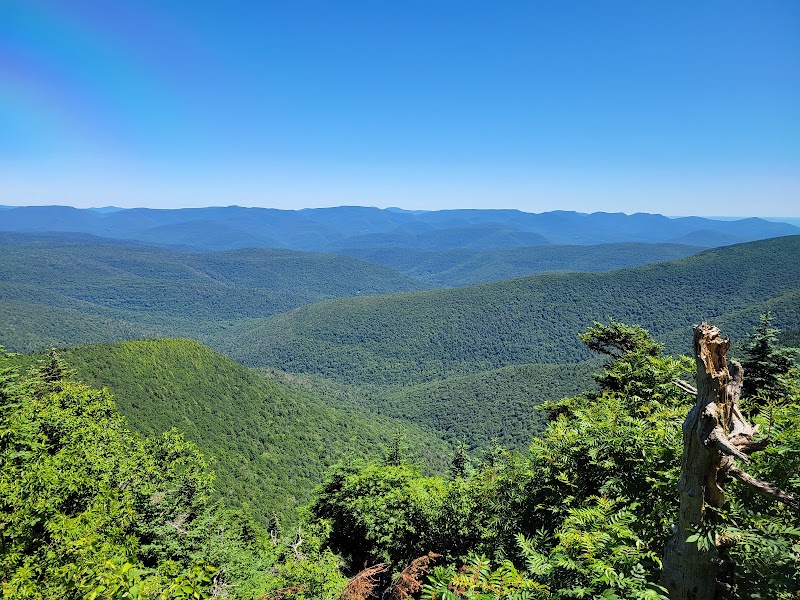
Pine Hill-West Branch Trail — Slide Mountain Wilderness
★ Reviews →A moderate loop in the Slide Mountain Wilderness above the 3,500-foot elevation line — the threshold where the Catskills' distinctive boreal spruce-fir forest begins, the only place in the eastern United States where this type of Canadian Zone forest grows at mountain summit elevation. Yellow-bellied flycatchers and Bicknell's thrush nest in the spruce-fir zone; the latter is one of the rarest breeding birds in North America, found in the northeastern US only above 3,000 feet. The summit of Table Mountain at 3,847 feet offers open views from its fire tower across the Catskill High Peaks.
~1.5 hrs📍 See location
☀️
Afternoon
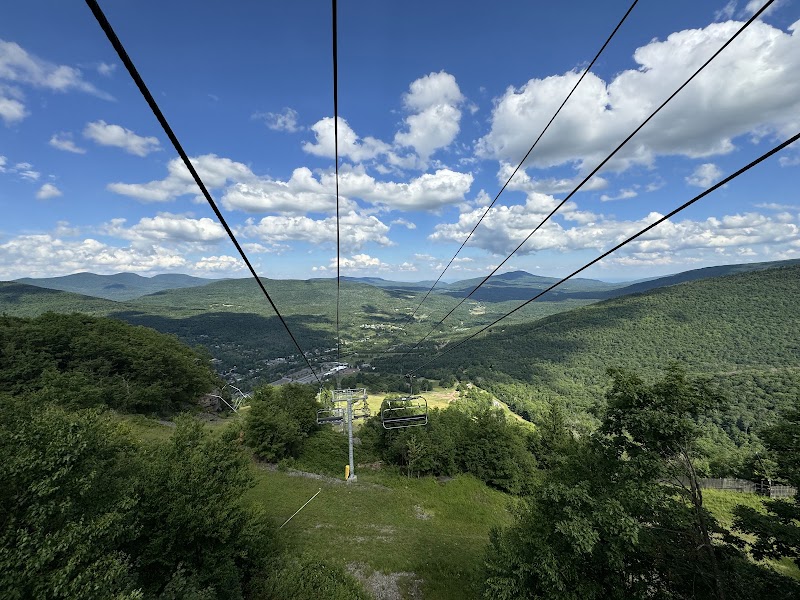
Hunter Mountain Gondola Ride
★ Reviews →Hunter Mountain's summer gondola carries visitors to the 3,940-foot summit — the second highest peak in the Catskills — where the Hunter Mountain Fire Tower offers a 360-degree view of five states on clear days: New York, Vermont, Massachusetts, Connecticut, and New Jersey. The fire tower, rebuilt in 2002, is one of the best-preserved in the Catskills; the summit also has a zipline tour operation in summer that crosses the exposed ridge above the ski trails. The gondola ride up and down takes 30 minutes each way and saves 3,000 feet of climbing.
~30 min📍 See location
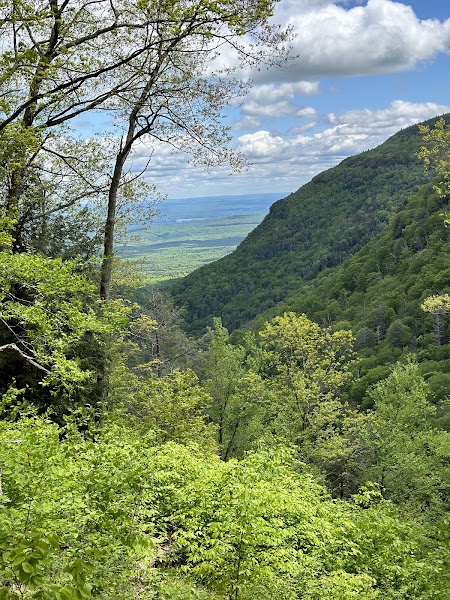
Platte Clove Preserve
★ Reviews →The Catskill Center's private nature preserve in Platte Clove — a dramatic glacial gorge cut into the eastern escarpment — has a 1.5-mile trail to multiple waterfalls in the clove's hemlock-lined creek bed. Platte Clove Road itself is one of the most dramatic mountain roads in the Northeast: the one-lane road descends 2,000 feet in under 3 miles through switchbacks so tight that delivery trucks are prohibited, with the Hudson Valley visible through the trees at every turn.
~1.5 hrs📍 See location
🌙
Evening
🍽️ Dinner~1 hr
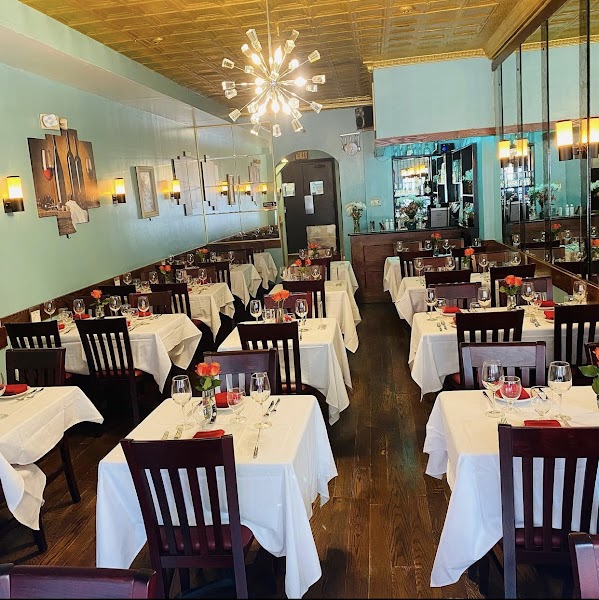
Cucina Restaurant
A Woodstock institution in a converted dairy barn on Tinker Street, Cucina serves rustic Italian cuisine — house-made pasta, wood-roasted meats, Catskill mushroom dishes — to Woodstock's arts-colony community and Hudson Valley day-trippers. The wine list is heavily Italian; the farmhouse setting and garden terrace make it the most atmospheric dinner in the Woodstock area. Woodstock itself, the arts colony that has operated since 1902 and inspired the 1969 festival held 60 miles away in Bethel, has a concentration of galleries, music venues, and bookshops worth exploring before dinner.
4 options · tap to switch
🛏️
The Woodstock Inn on the Millstream or Saugerties B&B
The Woodstock Inn on the Millstream is the most atmospheric choice — a cluster of renovated cottages along Tannery Brook in the middle of Woodstock village. Saugerties, 12 miles east on the Hudson River, has additional B&B options and a beautiful lighthouse on the Hudson accessible by a half-mile boardwalk trail.
Day 3 — Minnewaska State Park Preserve, NY
Day 3 — Minnewaska State Park Preserve, NY
🚗 3 hr driving📍 6 stops
🌅
Morning
🚗
Drive
Woodstock, NY → Minnewaska State Park Preserve, Kerhonkson, NY
1 hr
Drive south via US-209 through Kingston and along the base of the Shawangunk Ridge to the Minnewaska State Park entrance in Kerhonkson.
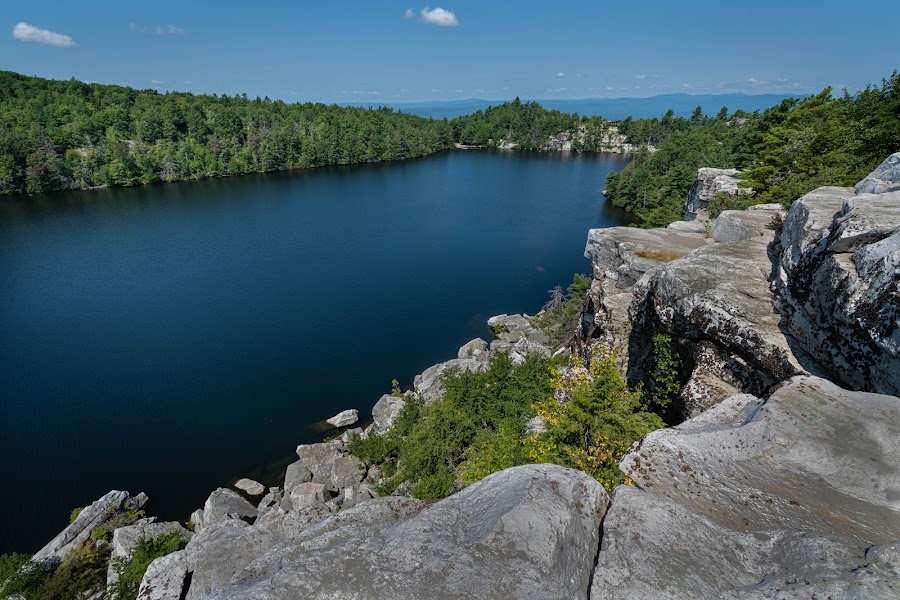
Lake Minnewaska
★ Reviews →The sky lake at 1,650 feet atop the Shawangunk Ridge — a 33-acre swimming lake of extraordinary clarity sitting in a bowl of white Shawangunk conglomerate bedrock, the same quartzite that the Gunks rock climbing community has made famous. The Shawangunks' acidic, nutrient-poor quartzite prevents soil formation across the ridgetop, creating the unique dwarf pitch pine barrens found in this form nowhere else on earth: thousands of acres of stunted pines, blueberry thickets, and open rock slabs above a landscape otherwise dominated by forest. The carriage roads around Lake Minnewaska were built in the 1870s for Albert Smiley's Cliff House resort, one of two Victorian mountain hotels he built on the ridge; the NYS Office of Parks now maintains the 35-mile carriage road network for hiking and cycling.
~1.5 hrs📍 See location
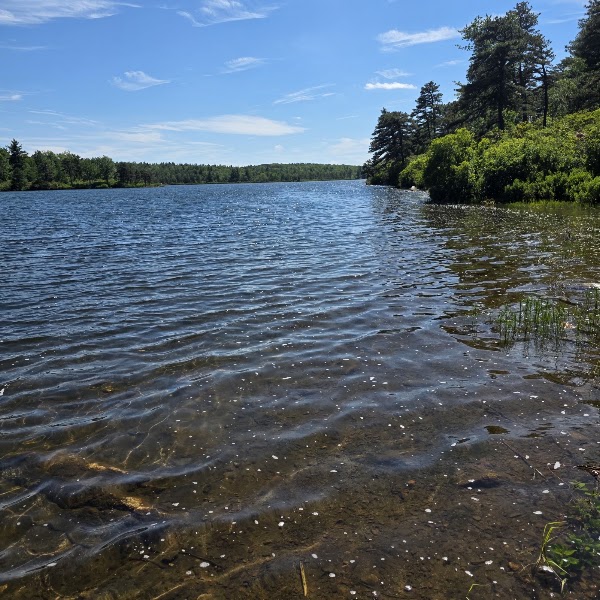
Lake Awosting
★ Reviews →A 4.5-mile hike from the Minnewaska trailhead carries you south through the dwarf pine barrens along the Castle Point carriage road to the larger and more remote of the Shawangunk sky lakes — 157 acres of the same startlingly clear quartzite-filtered water as Minnewaska, set in a broader basin of open rock and pitch pine scrub. Swimming is permitted at Lake Awosting's shallow, sandy-bottomed shoreline; the lake has no motorized access and relatively few visitors compared to Minnewaska. A pair of bald eagles has nested at Lake Awosting since 2008, the first successful bald eagle nesting in the Hudson Valley in over a century. The trail back crosses the open conglomerate outcrops of the High Peters Kill area with westward views to the Catskills.
~1.5 hrs📍 See location
🍽️
Lunch
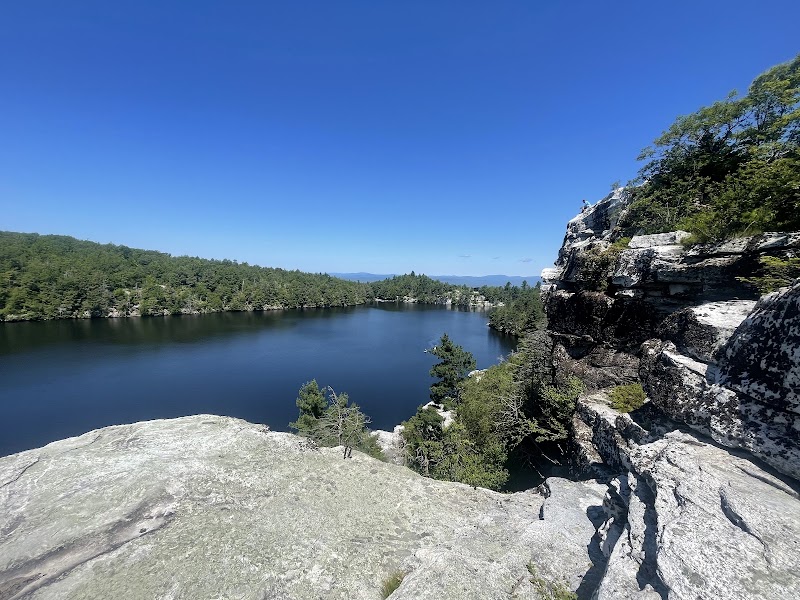
Minnewaska Trailhead Café
★ Reviews →The park entrance building at Minnewaska operates a small seasonal café with sandwiches, snacks, and coffee — the most convenient midday option given the distance to town. Alternatively, pack a picnic lunch from the Woodstock co-op or a Kerhonkson deli and eat at Lake Awosting's shoreline for the best possible Shawangunk lunch setting.
~2.5 hrs📍 See location
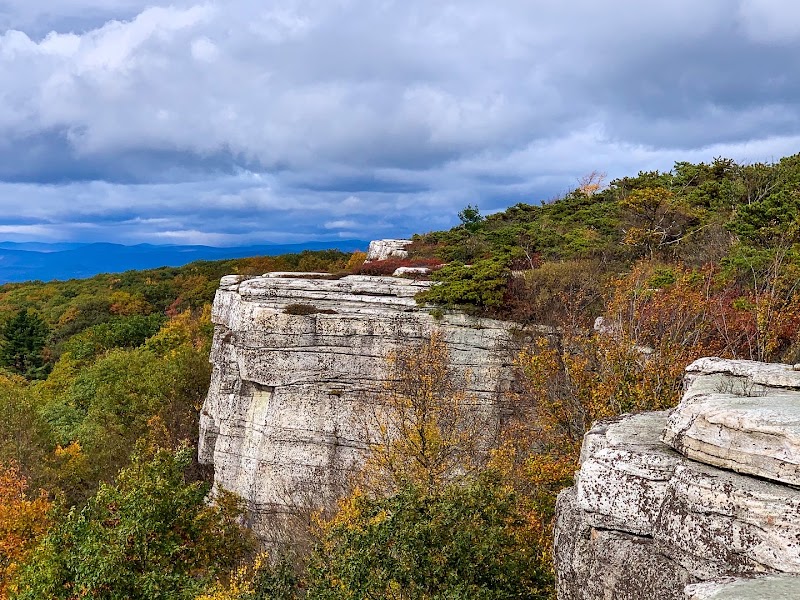
Sam's Point Preserve — Ice Caves
★ Reviews →The southernmost point of the Shawangunk Ridge, managed by The Nature Conservancy — and the site of the finest dwarf pitch pine barrens on earth, a globally rare ecosystem covering hundreds of acres of open quartzite ridgetop. The 0.8-mile loop trail from the Sam's Point trailhead descends into a labyrinth of ice caves beneath the jumbled Shawangunk conglomerate boulders, where the geometry of the rock piles traps cold air and maintains freezing temperatures year-round: the caves register below 32°F in July and August while the surrounding ridgetop bakes in summer sun. The contrast of stepping from 80-degree pine barrens into a 28-degree ice cave is one of the strangest thermal experiences in the Northeast.
~30 min📍 See location
☀️
Afternoon
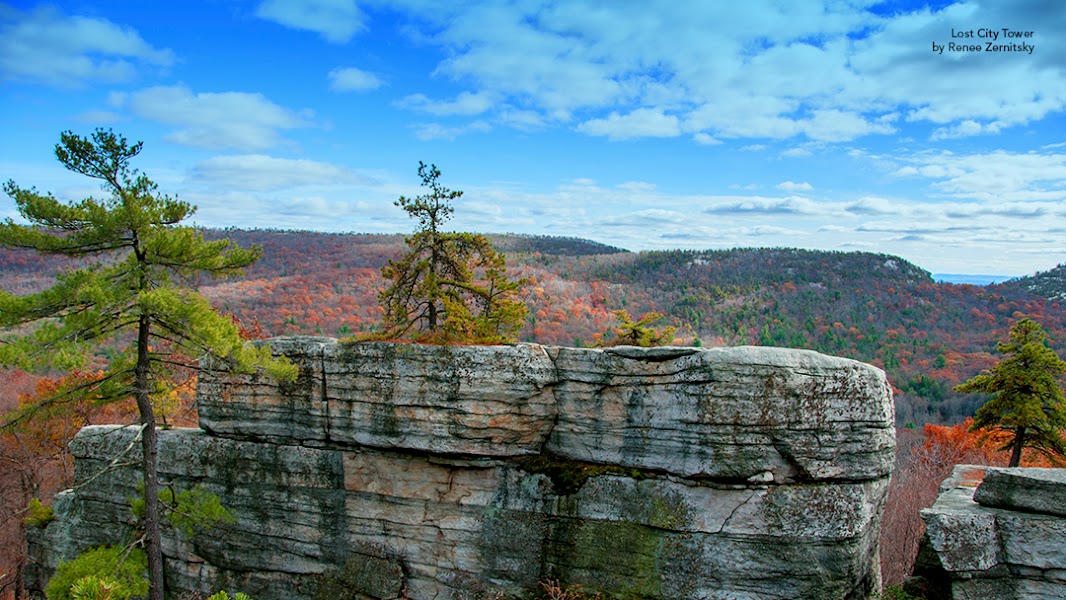
Mohonk Preserve — Trapps Gateway
★ Reviews →The Trapps — a one-mile-long, 250-foot-high cliff of Shawangunk conglomerate immediately north of the Trapps Bridge on US-44 — is the most famous rock climbing crag in the eastern United States, with over 1,000 established traditional routes on quartzite that climbers simply call 'the Gunks.' The horizontal crack systems that run through the overhanging conglomerate produce a style of climbing found almost nowhere else in the world, and the Gunks' community of traditional climbers has maintained an ethic of clean, bolt-free climbing since the 1950s. Non-climbers can walk the Trapps Bridge carriage road along the cliff base and watch climbers executing overhanging moves on routes directly above the path; the experience of looking up at vertical and overhanging rock faces with tiny figures 200 feet up is extraordinary from trail level. Day passes to the Mohonk Preserve ($15) cover the carriage road system.
~1.5 hrs📍 See location
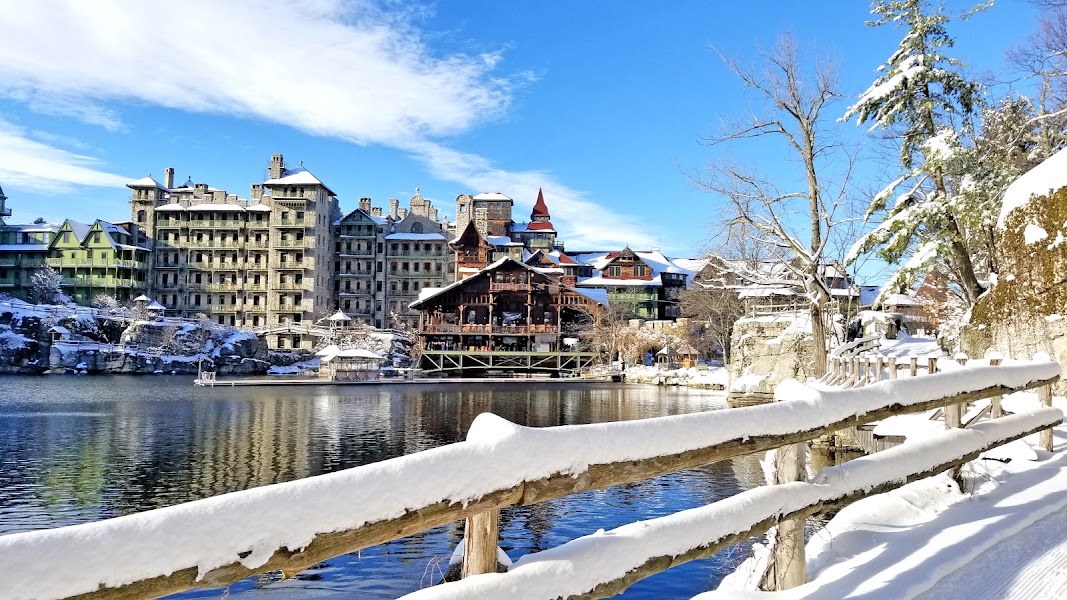
Mohonk Mountain House — Exterior View
★ Reviews →The Mohonk Mountain House — a 286-room Victorian castle resort built beginning in 1869 by twin brothers Albert and Alfred Smiley on a private mountain lake at 1,246 feet on the Shawangunk Ridge — is a National Historic Landmark and one of the last surviving 19th-century American mountain resort hotels operating continuously under the same family. Non-guests can purchase day passes ($45-60) to walk the grounds and the 85 miles of historic carriage roads that the Smiley family has been building and maintaining since 1869; the carriage roads cross the ridgetop, pass through hemlock glens, and connect the main house with 125 gazebos placed at scenic viewpoints across the property. The view of the Mountain House from the lake — the Victorian turrets and towers rising above the water against the ridge — is one of the most improbable architectural sights in the northeastern landscape.
~1.5 hrs📍 See location
🌙
Evening
🚗
Drive
Minnewaska State Park Preserve, NY → Philadelphia, PA
2 hr
Return via I-87 S (New York State Thruway) to NJ-17 S and I-78 W to Philadelphia.
← All Philadelphia trips
More getaways from Philadelphia
Delaware Water Gap: Waterfalls, Summit Views & River Swimming — Day trip🥾Delaware Water Gap: Waterfalls, Ridge Hiking & Niagara of Pennsylvania — Weekend🥾Pocono Mountains Circuit: Waterfalls, Gorge Rafting & Hawk Migration — Long weekend🥾Steam Trains & Amish Farmlands: Lancaster County in a Day — Day trip🏛️Pennsylvania Dutch Country: Steam Trains, Plain Communities & Colonial Communes — Weekend🏛️Pennsylvania Dutch Country: Three Days Among Plain Communities, Colonial History & Artisan Traditions — Long weekend🏛️Brandywine Valley: Longwood Gardens, Wyeth & Delaware River Countryside — Day trip🌿Brandywine Valley Weekend: Du Pont Estates, Wyeth Country & Delaware River — Weekend🌿
© 2026 theweekendgetaways.com · All itineraries are original content. Terms
Plan your own escapeExplore more trips →