🌿 RelaxedLong weekend · from Philadelphia, PA
Jersey Shore Circuit: Cape May, Atlantic City & the Pine Barrens
Three days trace the full length of the New Jersey coastline from Philadelphia — south to the nation's oldest seaside resort at Cape May, north along the boardwalk city of Atlantic City where Lucy the Elephant has stood since 1881, and inland to the Pine Barrens where Batsto Village's bog iron furnace illuminates the forgotten industrial history of colonial New Jersey. The Pine Barrens themselves are one of the largest and strangest wilderness areas in the eastern United States — 1.1 million acres of pitch pine and Atlantic white cedar growing in tea-colored cedar water streams, just 30 miles from the casinos.
Day 1 — Cape May, NJDay 2 — Atlantic City & Ocean City, NJDay 3 — Pine Barrens & Batsto Village, NJ
Day 1 — Cape May, NJ
Day 1 — Cape May, NJ
🚗 1 hr 30 min driving📍 8 stops
🌅
Morning
🚗
Drive
Philadelphia, PA → Cape May, NJ
1 hr 30 min
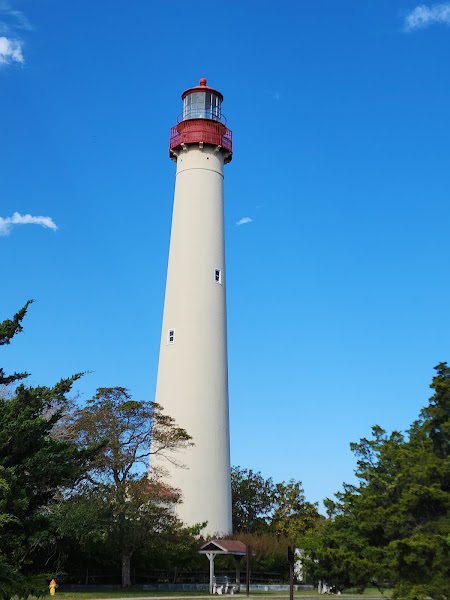
Cape May Lighthouse
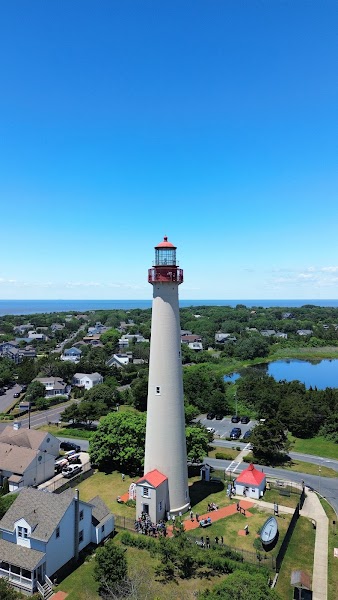
★ Reviews →The third lighthouse built on Cape May Point — its two predecessors were consumed by Delaware Bay erosion — this 1859 brick tower stands 157 feet tall at the southernmost tip of New Jersey, where Delaware Bay meets the Atlantic Ocean. The 199-step climb to the gallery deck is rewarded with views that take in both bodies of water simultaneously: the broad, bay-colored Delaware to the west, where the silhouettes of tankers and container ships form a distant maritime horizon, and the blue Atlantic to the east, where the coastline runs north in a nearly straight barrier-island arc toward Atlantic City. The lighthouse's Fresnel lens — a rotating third-order optic that casts a beam visible 24 miles at sea — was restored to operational condition in 1988. The keeper's house at the base contains an exhibit on the lighthouse's history and the Cape May Point lifesaving station, which conducted some of the most dramatic small-boat rescues in Delaware Bay history.
~45 min📍 See location
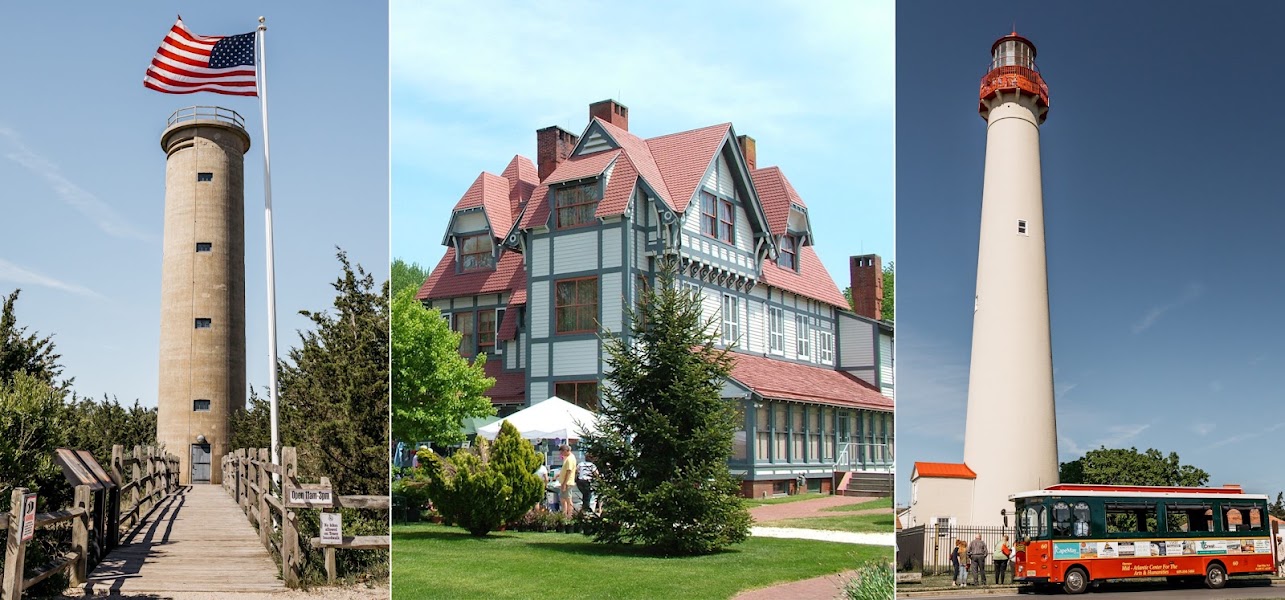
Cape May Historic District Walking Tour
★ Reviews →Cape May's designation as a National Historic Landmark City rests on more than 600 Victorian structures concentrated in a 256-acre district — the most complete and architecturally intact Victorian resort streetscape surviving in America. The city's fortunes as a resort peaked in the 1850s and 1870s, when it was the most fashionable seaside destination on the East Coast, drawing Presidents Pierce, Buchanan, Grant, and Harrison to its hotel verandas. Congress Hall, built in 1816 and rebuilt in its current form in 1879, is the oldest seaside resort hotel in continuous operation in the United States — its long white veranda faces the ocean at the base of the main beach promenade. The walking tour should include Washington Street Mall, the main pedestrian shopping street converted from a Victorian commercial row; Congress Hall's ocean-facing grounds; and Beach Avenue, where the grandest Victorian cottages — Queen Anne, Second Empire, Stick Style, and Eastlake — face the ocean in an unbroken row of carpenter-gothic ornament.
~1 hr📍 See location
🍽️
Lunch
🍽️ Lunch~1 hr
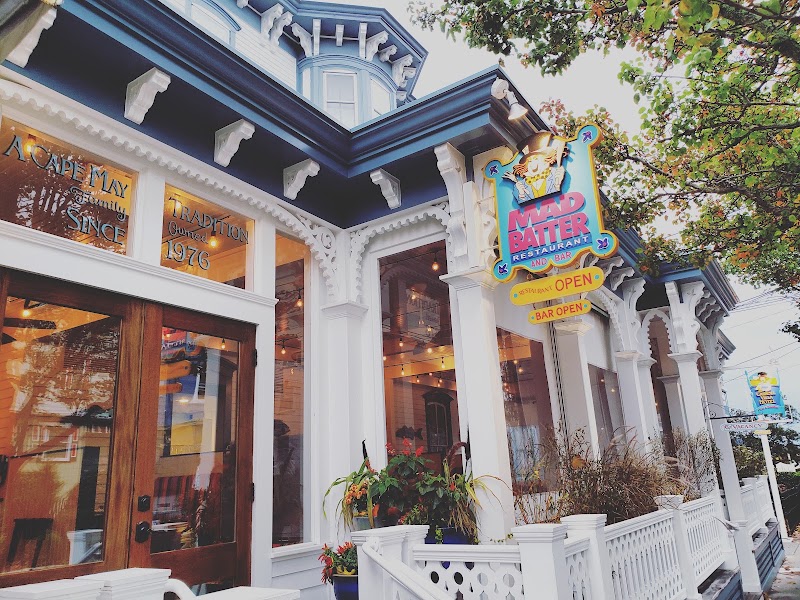
The Mad Batter
Installed in the 1872 Carroll Villa Hotel on Jackson Street — one of the finest Italianate Victorian cottages in the historic district — The Mad Batter has been the preferred Cape May lunch destination for serious eaters since 1975. The kitchen produces a brunch and lunch menu built on local ingredients: New Jersey blue crab cakes with a jalapeño remoulade, a lobster bisque made from shells sourced from the Cape May fishing fleet, and a grilled fish sandwich using whatever the boats brought in that morning. The front veranda — shaded by a canvas awning and overlooking the Carroll Villa's Victorian garden — is the most pleasant outdoor dining room in Cape May on a warm morning, and reservations are essential on summer weekends.
4 options · tap to switch
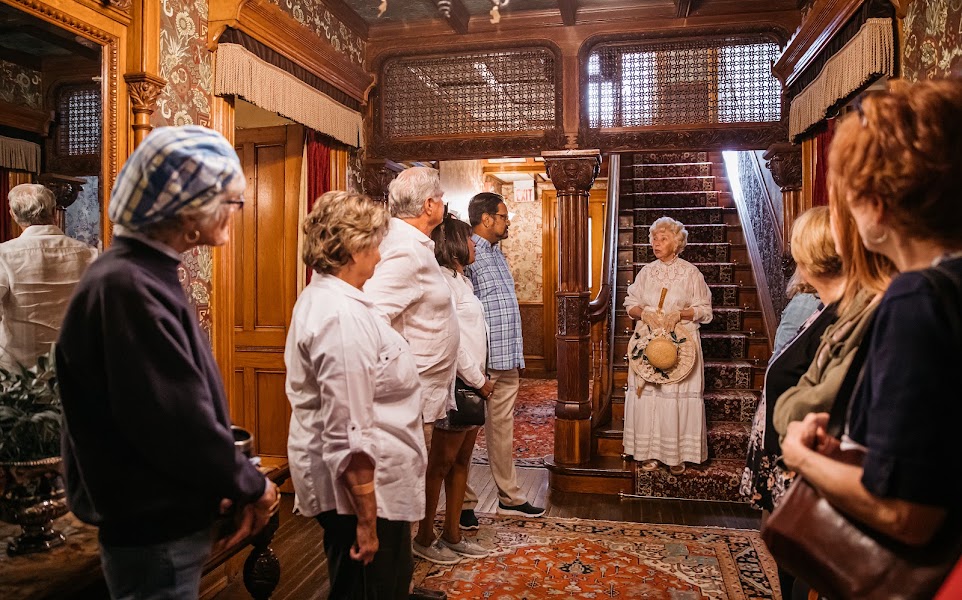
Emlen Physick Estate
★ Reviews →The 18-room house that Philadelphia architect Frank Furness designed for the Physick family in 1879 is the finest surviving example of his Stick Style residential work — a genre in which Furness used exposed structural framing, decorative trusses, and elaborately overhanging eaves to create houses that express their structural logic as ornament. The Cape May MAC (Mid-Atlantic Center for the Arts and Humanities) conducts guided tours of the house's restored interior, which includes original Eastlake furnishings, Furness-designed built-in woodwork, and a carriage house museum that contextualizes the Physick Estate within the broader history of Victorian Cape May. The estate's grounds are the departure point for the MAC's narrated trolley tours of the historic district, which cover the full range of Victorian architectural styles present in the city's 600-plus historic structures.
~1.5 hrs📍 See location
☀️
Afternoon
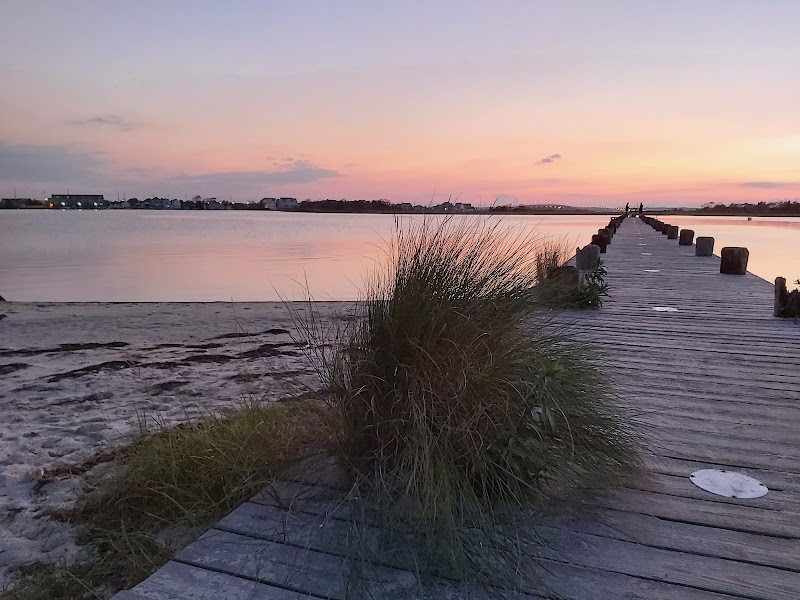
Sunset Beach
★ Reviews →A narrow gravel beach on Delaware Bay at the southernmost point of Cape May, where the peculiar local phenomenon of Cape May diamonds — naturally polished quartz agates tumbled smooth by the bay's tidal action — lies scattered among the rounded stones at the water's edge. The gemstones are genuine quartz crystal, originating in the Appalachian quartz deposits far upriver and traveling the full length of the Delaware River system before washing up here. The rusting concrete hulk just offshore is the SS Atlantus — one of twelve experimental concrete-hulled ships built in 1918 to conserve steel during World War I; the Atlantus was intended to serve as part of a ferry dock here and sank in a 1926 storm, where it has remained as Cape May's most peculiar landmark. A nightly ceremony at sunset — a recorded bugle playing as the American flag is lowered over the bay — draws a respectful crowd of summer visitors to this unassuming stretch of gravel.
~2 hrs📍 See location
Cape May Point State Park
★ Reviews →The 244-acre park at the southernmost tip of Cape May Point constitutes one of the most important raptor migration watchpoints on the East Coast — a position it owes to geography: the Cape May Peninsula funnels migrating hawks, falcons, and eagles as they move south along the Atlantic flyway, and the birds concentrate at the point before crossing Delaware Bay, reluctant to cross the open water. The hawk counter platform at the park's observation deck has been staffed continuously since 1976, producing one of the longest unbroken counts in North American raptor monitoring; peak days in September and October yield thousands of Sharp-shinned Hawks, Cooper's Hawks, American Kestrels, and Merlins passing the counter in a single morning. Outside of hawk season, the park's freshwater ponds, brackish marshes, and coastal dune scrub support breeding rails, nesting Least Terns, and a concentration of warblers, vireos, and thrushes during spring and fall migration that makes Cape May one of the most celebrated birding destinations in the Western Hemisphere.
~2 hrs📍 See location
🌙
Evening
🍽️ Dinner~1 hr
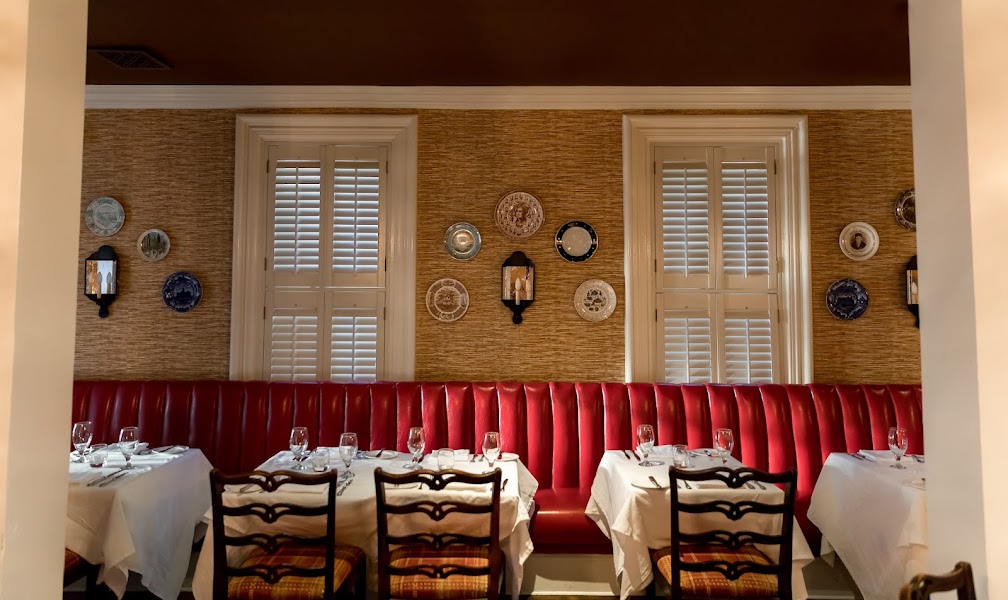
The Ebbitt Room
The dining room of the Virginia Hotel — Cape May's most refined inn, a 24-room property in a converted 1879 Italianate commercial building on Jackson Street — is widely regarded as the finest restaurant in New Jersey's cape region. Chef Josh Rosen's kitchen draws on the extraordinary resources of the southern Jersey Shore: Cape May fishing fleet catches landed at the Cold Spring Fish & Supply Co. dock, oysters harvested from the Delaware Bay's Bivalve and Cape May Court House beds, and produce from the vegetable farms that occupy the sandy loam between the Shore and the Pine Barrens. The menu changes weekly with the catch and the season; the wine list, managed by a certified sommelier, is the most serious in Cape May County.
4 options · tap to switch
🛏️
The Virginia Hotel, Cape May
A 24-room boutique hotel in a converted 1879 Italianate commercial building on Jackson Street — the most quietly luxurious lodging in Cape May, with rooms furnished in understated Victorian style, a library stocked with New Jersey Shore history and natural history, and a concierge service that can arrange early-morning birding walks in Cape May Point State Park. Alternatives for different price points and atmospheres include Congress Hall (the historic 1879 grand hotel on the main beach, with 110 rooms, a pool, and the Brown Room restaurant), the Mainstay Inn (an 1872 Italianate villa with elaborate Eastlake interior furnishings, operating as a B&B since 1971), and the Inn at Cape May (a 69-room Victorian inn directly on the beach promenade).
Day 2 — Atlantic City, NJ
Day 2 — Atlantic City, NJ
🚗 1 hr 30 min driving📍 8 stops
🌅
Morning
🚗
Drive
Cape May, NJ → Atlantic City, NJ
1 hr 30 min
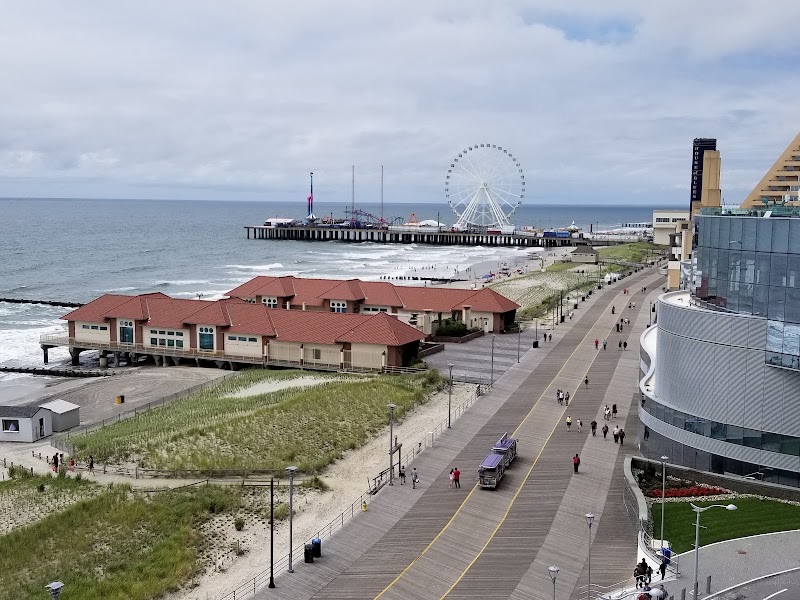
Atlantic City Boardwalk
★ Reviews →The world's first boardwalk, built in 1870 as a temporary wooden walkway to solve the practical problem of beach-sand being tracked into the grand hotels — the original 1-mile structure was replaced with the permanent 4-mile boardwalk in 1896, and the current 60-foot-wide structure of Atlantic white cedar planking runs from Absecon Inlet in the north to the Ventnor city border in the south. At its peak around 1910, Atlantic City drew 10 million visitors annually to its ten major beachfront hotels, 1,000 cottage rentals, and the Steel Pier, which stretched 2,000 feet into the Atlantic as a continuous amusement platform. The boardwalk today anchors the Hard Rock Hotel in the former Trump Taj Mahal building — the most architecturally extravagant casino ever built in America, modeled on the Taj Mahal with minarets, ornamental domes, and a facade that contains more surface ornament than any other building in New Jersey. The long morning walk from the Absecon Inlet end to the Steel Pier, past the salt air concession stands and the rolling chair operators who have been pushing wicker chairs along this boardwalk since 1887, remains one of the more peculiar and authentically American experiences on the East Coast.
~1 hr📍 See location
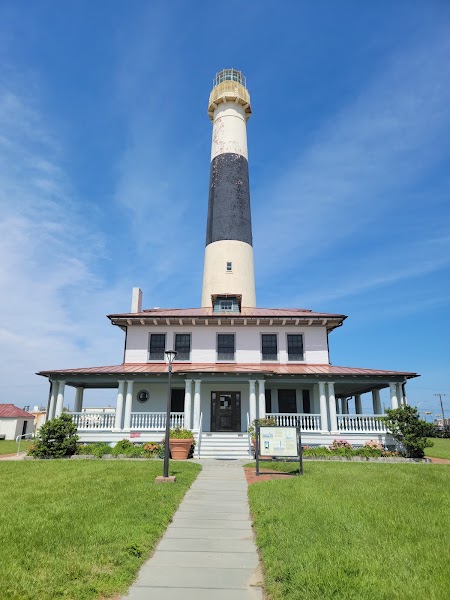
Absecon Lighthouse
★ Reviews →Built in 1857 on a site chosen by U.S. Army engineer George Meade — the future commander at Gettysburg — the Absecon Lighthouse was constructed specifically because the barrier island that would become Atlantic City had claimed 150 ships in the previous 25 years, the worst shipwreck rate on the New Jersey coast. At 170 feet, it is the tallest lighthouse in New Jersey and the third tallest in the United States. The 228-step climb to the gallery deck delivers an unobstructed panorama of the entire Atlantic City barrier island — casino towers to the south, the Absecon Inlet and back-bay marshes to the north, and the Atlantic Ocean laid flat to the east. The restored lantern room displays the original fourth-order Fresnel lens, the most complex optical instrument in common use in the 19th century, with its concentric rings of hand-ground glass prisms arranged to bend a single flame into a concentrated beam visible twenty miles offshore.
~45 min📍 See location
🍽️
Lunch
🍽️ Lunch~1 hr
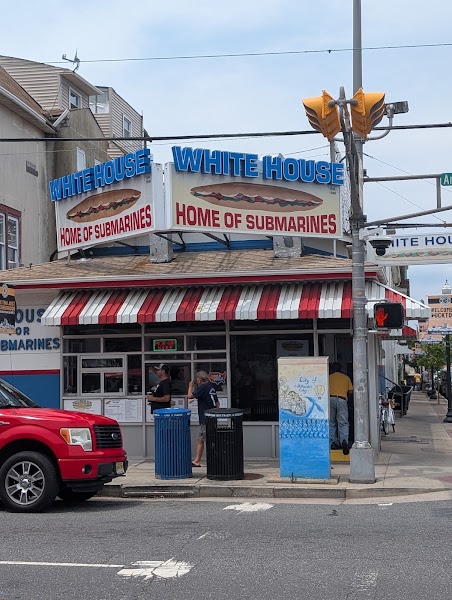
White House Sub Shop
Open since 1946 in a narrow storefront on Mississippi Avenue two blocks off the Boardwalk, the White House Sub Shop is Atlantic City's most beloved institution — the sandwich counter that Frank Sinatra, Jerry Lewis, and Joe DiMaggio ordered from during the Rat Pack's Steel Pier years, and that has maintained an unchanged menu and preparation method through the city's casino boom and bust. The Italian hoagie — cured meats, provolone, shredded iceberg, oil and vinegar on a roll baked fresh by the South Jersey Italian bakery that has supplied the shop since opening — arrives in a wax-paper wrapping that cannot be improved upon. The line moves quickly, the counter staff has been there for decades, and the sandwiches are large enough to constitute lunch and part of dinner.
4 options · tap to switch
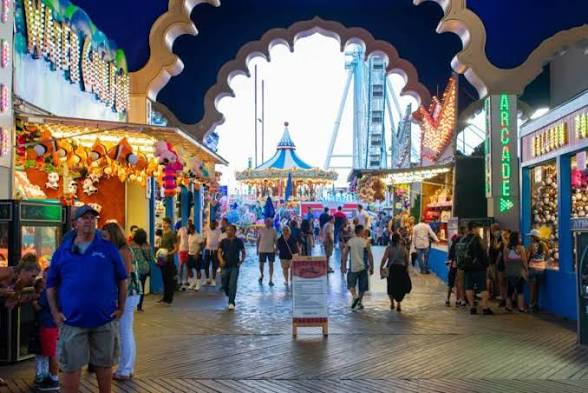
Steel Pier
★ Reviews →Rebuilt in 2006 on the site of the original 1898 Steel Pier, the current structure extends 1,000 feet into the Atlantic on rebuilt pilings, carrying an observation wheel and amusement rides over the open ocean. The original Steel Pier at its 2,000-foot maximum extent was the most spectacular amusement structure ever built on the Jersey Shore: it hosted the original diving horse act — a horse ridden by a young woman that jumped from a 40-foot platform into a tank of water twice daily — and presented every major American big band from 1945 to 1971, including Frank Sinatra, Benny Goodman, Tommy Dorsey, and Glenn Miller. The adjacent Hard Rock Hotel, in the former Trump Taj Mahal building completed in 1990, remains the most architecturally ambitious casino building in America: 4.4 million square feet faced in white Venetian plaster, topped with 14 minarets and four Mughal onion domes, and decorated internally with rock-and-roll memorabilia on a scale that approaches museum territory.
~3 hrs📍 See location
☀️
Afternoon
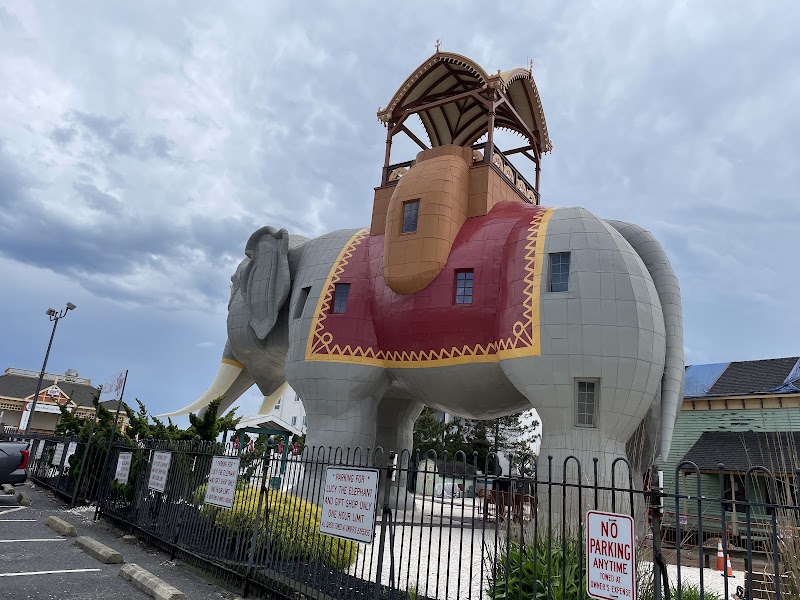
Lucy the Elephant
★ Reviews →A six-story, 65-ton elephant built in 1881 from roughly one million pieces of wood covered with tin sheeting, standing on the Margate City beach just south of Atlantic City — the most improbable National Historic Landmark in the United States. James V. Lafferty built Lucy as a real estate marketing gimmick to attract buyers to his undeveloped Margate shore properties, constructing her with an interior staircase that led real estate prospects up through her hollow body to a howdah viewing deck on her back, where Lafferty would gesture at the surrounding properties and extol their investment potential. Lucy survived an early career as a seaside tavern, a period as a cottage rental (guests slept in her interior), and decades of abandonment and salt air deterioration before a coalition of Margate residents raised funds to restore and relocate her in 1970. Tours wind up through her interior staircase to the howdah deck, where the view south toward Ocean City and north toward Atlantic City's casino towers frames her improbable survival story with particular clarity.
~45 min📍 See location
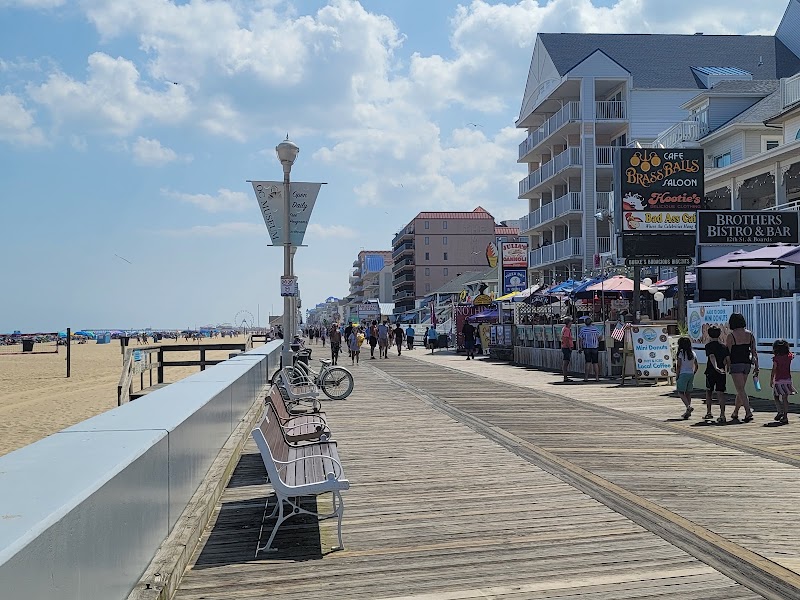
Ocean City Boardwalk
★ Reviews →Eight miles of family-friendly boardwalk in the dry, no-gambling resort city south of Atlantic City — a deliberate counterpoint established by Methodist ministers who founded Ocean City in 1879 with a charter prohibiting the sale of alcohol, a covenant that remains legally enforced and essentially unchanged 145 years later. The 1880 boardwalk has been the venue for three of the longest-continuously-operating boardwalk businesses in New Jersey: Shriver's Salt Water Taffy (1898), which still pulls taffy in the front window of its original Atlantic Avenue store in the same copper kettles used since the McKinley administration; Johnson's Caramel Popcorn (1930), still operating from a converted Victorian storefront; and Gillian's Wonderland Pier, an amusement park that opened in 1929 and still runs its original 1926 carousel. The Ocean City boardwalk's evening atmosphere — families, bicycles, funnel cake stands, children collecting hermit crabs in buckets — represents a kind of American seaside resort experience that has largely vanished elsewhere on the East Coast.
~1 hr📍 See location
🌙
Evening
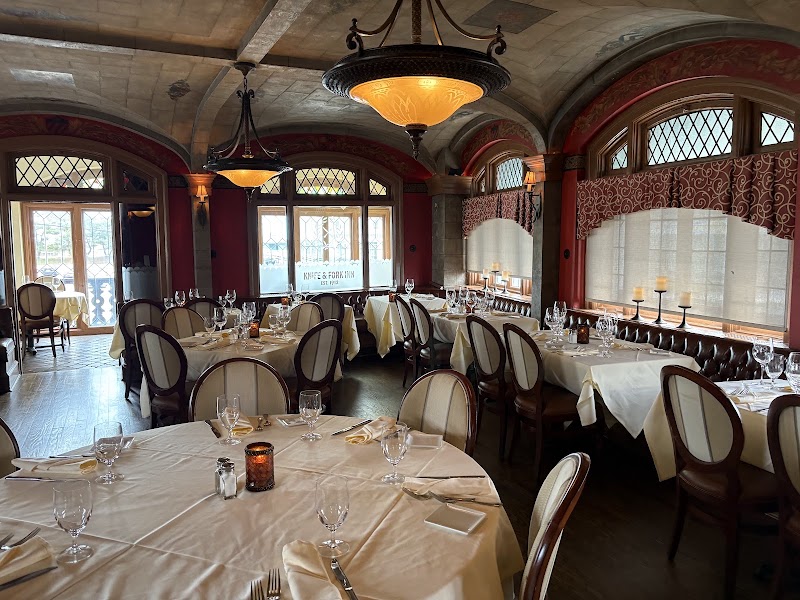
Knife & Fork Inn
★ Reviews →The Knife & Fork Inn has occupied its Tudor Revival corner building at Atlantic and Pacific Avenues since 1912 — operating initially as a private men's club where Atlantic City's political bosses and gambling interests conducted their negotiations over roast beef, and transforming into a public supper club in 1927 when Prohibition enforcement became inconvenient for a private establishment serving liquor. The current kitchen under the Dougherty family's ownership since 1927 produces the most traditional New Jersey Shore seafood dinner available in Atlantic City: a whole lobster from the Maine and Nova Scotia fishery, pan-seared local flounder, and a clam chowder using quahogs from the Cape May beds. The three-story dining room retains its dark-paneled mahogany walls, stained glass windows, and pressed-tin ceilings, making dinner here feel appropriately like dining in a building that has witnessed most of Atlantic City's history.
~1 hr📍 See location
🛏️
Chelsea Hotel Atlantic City
A 330-room boutique hotel in a 1915 beachfront building at the quieter southern end of the Atlantic City boardwalk, between the casino district and Ventnor City — the closest equivalent to a proper beach hotel that Atlantic City currently offers. The building retains its original terracotta facade and roofline ornament; the interior was renovated to a mid-century modern aesthetic with an outdoor pool and direct boardwalk access. Alternatives for the two-night stay include the Ocean Casino Resort (the former Revel — the largest building in New Jersey at 1,399 rooms, built in 2012 on Absecon Inlet with unobstructed ocean views), the Traymore Hotel in Ocean City across the causeway (family-oriented, oceanfront, no gambling), and the Flanders Hotel in Ocean City (a 1923 Spanish Colonial Revival hotel on the boardwalk, recently renovated as a boutique property).
Day 3 — Wharton State Forest, NJ
Day 3 — Wharton State Forest, NJ
🚗 2 hr 15 min driving📍 6 stops
🌅
Morning
🚗
Drive
Atlantic City, NJ → Batsto Village, Wharton State Forest, NJ
45 min
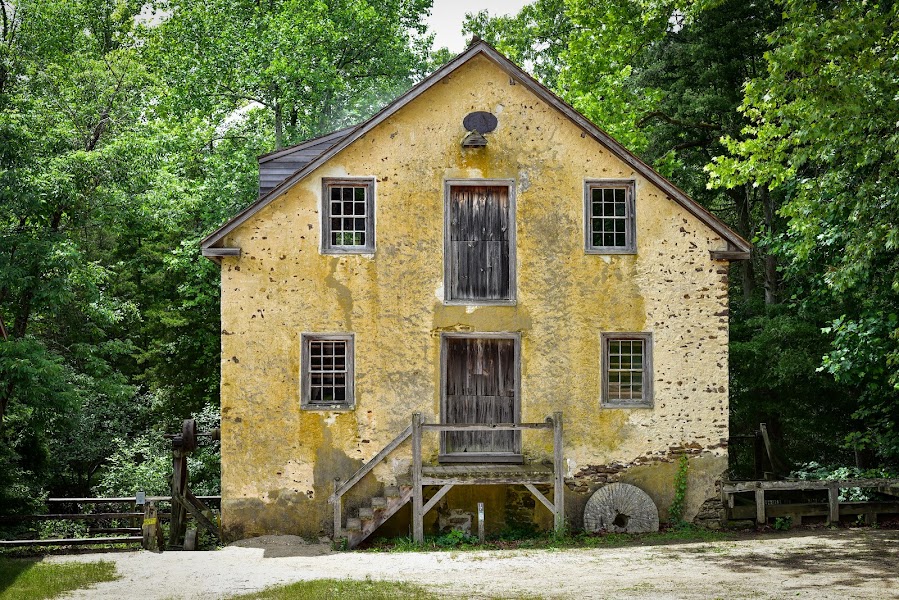
Batsto Village
★ Reviews →The most historically significant site in the Pine Barrens and one of the most complete surviving industrial villages in the eastern United States: Charles Read established the Batsto Iron Furnace here in 1766, exploiting two resources that the Pine Barrens provided in extraordinary abundance — bog iron, the spongy iron ore that precipitates naturally from the tannin-rich groundwater in cedar swamp soils, and charcoal fuel from the seemingly inexhaustible pine forests surrounding the village. The furnace supplied cannon balls, kettles, firebacks, and ammunition for the Continental Army throughout the Revolutionary War, and the Batsto Ironmaster was consequently one of the most strategically important industrial figures in colonial New Jersey. The ironworks operated until 1848, when the development of coal-blast furnaces in the Pittsburgh region made bog-iron smelting economically nonviable. Joseph Wharton, the Philadelphia financier whose name the state forest now bears, purchased the entire village in 1876 and converted it to an experimental agricultural estate. The 33-structure village that the State of New Jersey preserved in 1954 includes the ironmaster's mansion (an 1826 Italianate Victorian of unusual elegance for a rural iron village), the original gristmill, the sawmill, worker's cottages, and the earthwork charcoal hearths where pine cordwood was converted to fuel.
~45 min📍 See location
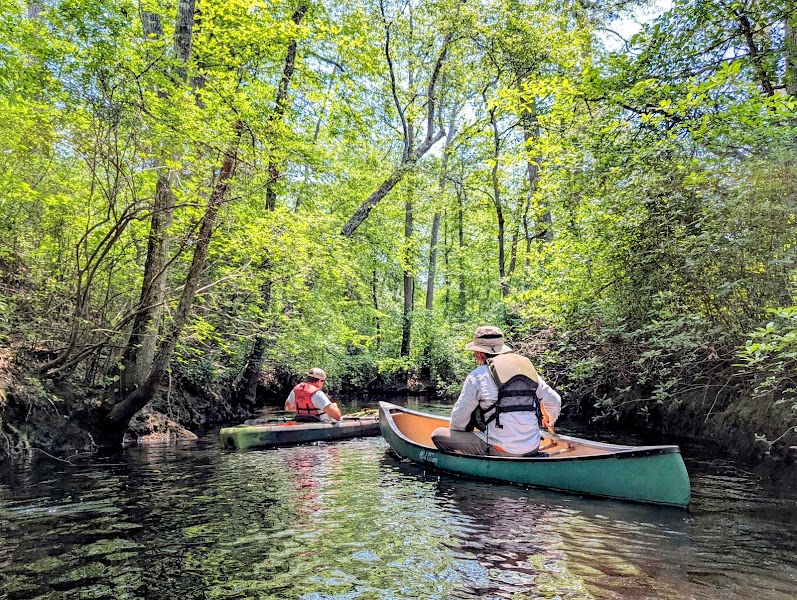
Pine Barrens Cedar Water Canoe
★ Reviews →The Mullica River at Batsto offers one of the finest flatwater paddles in the Pine Barrens — a river that has changed essentially nothing since the Lenape canoed it centuries before European contact. The water is stained a transparent amber-brown by tannins leaching from the roots of Atlantic white cedar in the swamps along the river's banks, achieving a clarity that reveals every grain of white sand on the bottom while appearing dark from above — a visual paradox that is one of the Pine Barrens' defining aesthetic experiences. The river corridor is bordered throughout by Atlantic white cedar swamps and mixed pine-oak forest; no development is visible from the water, and the silence is broken only by the calls of wood ducks, prothonotary warblers, and the occasional great blue heron flushing from a backwater. Canoe and kayak rentals are available from Batsto Village; the most popular route is a 6-mile loop through the cedar swamps south of the village.
~1 hr📍 See location
🍽️
Lunch
Continue at Batsto Village General Store Picnic
★ Reviews →Use the afternoon to explore a different side of Batsto Village — there's more to discover beyond the morning highlights.
~45 min📍 See location
Wharton State Forest Cranberry Bog Walk
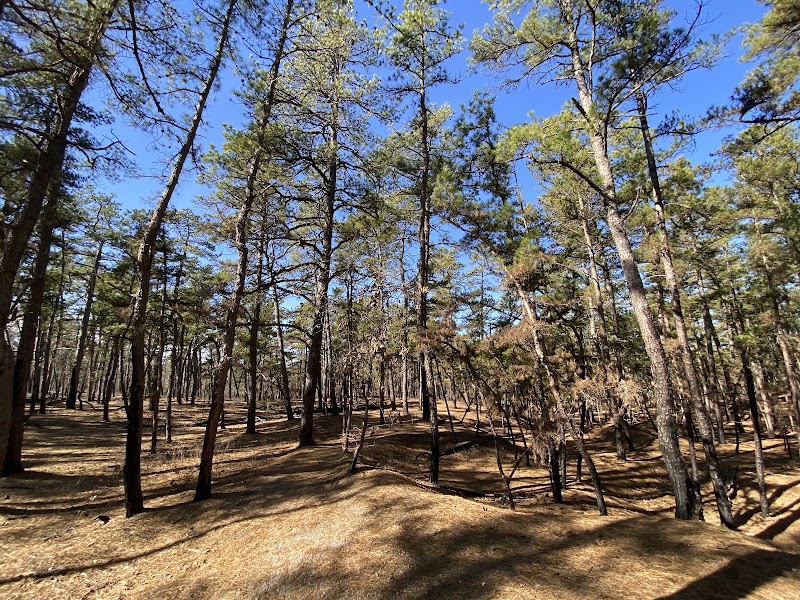
★ Reviews →New Jersey is the third largest cranberry producing state in the United States, after Massachusetts and Wisconsin, and the Pine Barrens bogs near the village of Chatsworth hold hundreds of acres of working cranberry bogs that have been cultivated since the 1840s on the acidic, nutrient-poor soils of the Pines interior. The bog walk trails through Wharton State Forest reveal both the natural and agricultural dimensions of the Pine Barrens landscape: the ombrotrophic bog habitat (raised bogs fed only by precipitation) supports carnivorous pitcher plants and sundews growing in the sphagnum moss, while the cultivated bogs nearby are managed with elaborate water-control structures for the annual wet harvest. In October, the harvest floods the bogs to float the ripe berries loose from their vines, and workers with floating booms herd the resulting sea of red berries into mechanical harvesters — a sight that draws photographers from across the region to an agricultural process most Americans have never seen at its source.
🥪No food available here — pack a trail lunch.
~2 hrs📍 See location
☀️
Afternoon
Brendan T. Byrne State Forest
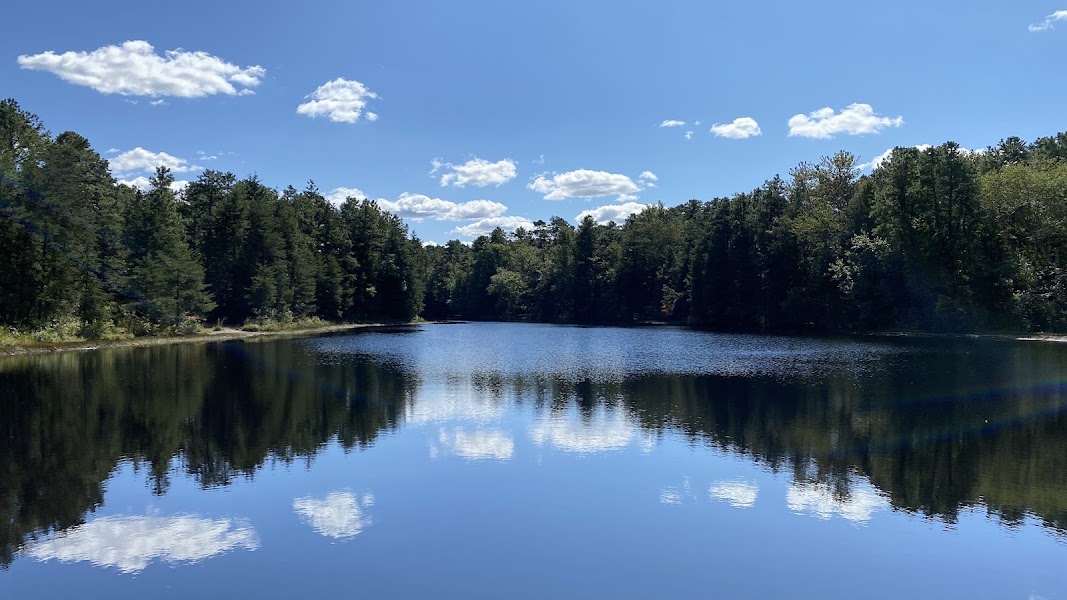
★ Reviews →The Pine Barrens' interior, accessible through Brendan T. Byrne State Forest (formerly Lebanon State Forest), is one of the most ecologically unusual landscapes in the eastern United States — a 1.1-million-acre wilderness growing on a 17-trillion-gallon Cohansey Aquifer that supplies drinking water to nearly half of New Jersey, yet situated within 30 miles of the Atlantic City casinos and 60 miles of central Philadelphia. The dominant vegetation is pitch pine and scrub oak, both fire-adapted species that regenerate vigorously after the periodic burns that maintain the Pine Barrens' open, park-like structure. In the wet depressions between sand ridges, Atlantic white cedar swamps grow in cathedral-dark corridors over tea-colored streams. The Pine Barrens tree frog — a species found only in this region and a few isolated Coastal Plain sites further south — calls from the bog margins on spring evenings. Carnivorous sundews and pitcher plants grow in the saturated sphagnum at the water's edge. The Batona Trail runs 53 miles through the heart of the Pines and provides the most complete immersive experience of the interior landscape.
~2 hrs📍 See location
Carranza Memorial
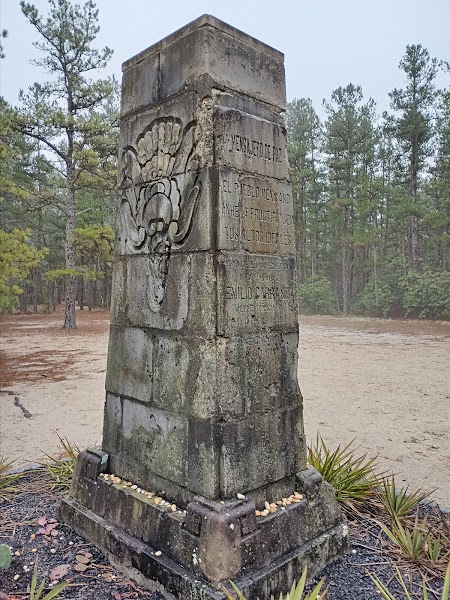
★ Reviews →A stone monument in a remote clearing in the Pine Barrens near the village of Tabernacle, marking the site where Mexican aviator Emilio Carranza crashed his Ryan B-1 monoplane on the night of July 12, 1928 — returning from a goodwill flight to the United States that had been the Mexican answer to Charles Lindbergh's transatlantic crossing the previous year. Carranza had flown from Mexico City to Washington and New York without incident, but on his return south he flew into a violent thunderstorm over the Pine Barrens and went down in the pines, where his wreck was not found for more than a day. The New Jersey National Guard has conducted an annual memorial ceremony at the site every July since 1930, drawing thousands of visitors to this isolated clearing in the pines — the remoteness of the location, the simplicity of the stone marker with its carved Mexican eagle, and the incongruity of a formal ceremony in the middle of one of the East Coast's largest wilderness areas make the Carranza Memorial one of the Pine Barrens' most affecting sites.
~45 min📍 See location
🌙
Evening
🚗
Drive
Wharton State Forest, NJ → Philadelphia, PA
1 hr 30 min
← All Philadelphia trips
More getaways from Philadelphia
Delaware Water Gap: Waterfalls, Summit Views & River Swimming — Day trip🥾Delaware Water Gap: Waterfalls, Ridge Hiking & Niagara of Pennsylvania — Weekend🥾Pocono Mountains Circuit: Waterfalls, Gorge Rafting & Hawk Migration — Long weekend🥾Steam Trains & Amish Farmlands: Lancaster County in a Day — Day trip🏛️Pennsylvania Dutch Country: Steam Trains, Plain Communities & Colonial Communes — Weekend🏛️Pennsylvania Dutch Country: Three Days Among Plain Communities, Colonial History & Artisan Traditions — Long weekend🏛️Brandywine Valley: Longwood Gardens, Wyeth & Delaware River Countryside — Day trip🌿Brandywine Valley Weekend: Du Pont Estates, Wyeth Country & Delaware River — Weekend🌿
© 2026 theweekendgetaways.com · All itineraries are original content. Terms
Plan your own escapeExplore more trips →